BPMN Guide
Learn BPMN, create clear process diagrams, and turn them into professional documentation

BPMN should make processes easier to understand, not harder to explain
BPMN is powerful because it gives teams a shared way to represent activities, decisions, responsibilities, handoffs, events, exceptions, and outcomes.
But BPMN only creates value when the diagram is clear enough for people to use.
A good BPMN model helps business stakeholders understand the flow, helps process analysts improve the process, and gives documentation or automation teams a structured foundation for the next step.
With HEFLO, BPMN can start as a simple diagram and evolve into a governed process asset: documented, validated, published, reused, and improved over time.
What is BPMN?
BPMN stands for Business Process Model and Notation. It is a standard notation used to represent business processes visually.
A BPMN diagram shows how work moves from a starting point to an outcome. It can include tasks performed by people or systems, decisions and routing rules, roles, departments, external participants, messages, events, exceptions, deadlines, and alternative paths.
In simple terms, BPMN helps teams answer an important question: how should this process work, from beginning to end?
BPMN is often used by process analysts, business analysts, operations teams, quality teams, compliance teams, IT teams, consultants, and organizations that need a clear and standardized way to understand and improve how work happens.

BPMN vs flowcharts: what is the difference?
A flowchart shows the basic sequence of steps in a process, while BPMN (Business Process Model and Notation) is a standard notation that adds shared meaning for roles, events, gateways, message flows, and exceptions. That is what lets BPMN represent how work really happens across people, teams, and systems.
A simple flowchart is enough for quick explanations, early brainstorming, or very simple procedures.
BPMN is the better choice when a process involves multiple roles, handoffs between teams, approvals, decision points, exceptions, deadlines, or systems, or when it may later be documented, governed, or automated.
In short, flowcharts are great for sketching an idea, and BPMN is built for modeling, standardizing, and scaling real business processes.
BPMN notation essentials
You do not need to use every BPMN symbol to create a useful process diagram. Most business processes can start with a practical subset of BPMN elements.

Events
Events represent something that happens in the process, such as the start, the end, a message, a deadline, or an exception.

Tasks
Tasks represent work that must be performed by a person, a system, or a business role.

Gateways
Gateways control how the process splits or joins, including decisions, parallel work, and conditional paths.

Sequence flows
Sequence flows show the order of activities inside the same process.

Pools and lanes
Pools and lanes organize responsibility across participants, teams, departments, or roles.

Message flows
Message flows show communication between different participants, usually across different pools.
See BPMN in action: build your first diagram
Watch this short BPMN 2.0 tutorial and follow along to create your first business process diagram in HEFLO.
Learn faster with BPMN diagram examples
Starting from a blank page is not always the best way to learn BPMN.
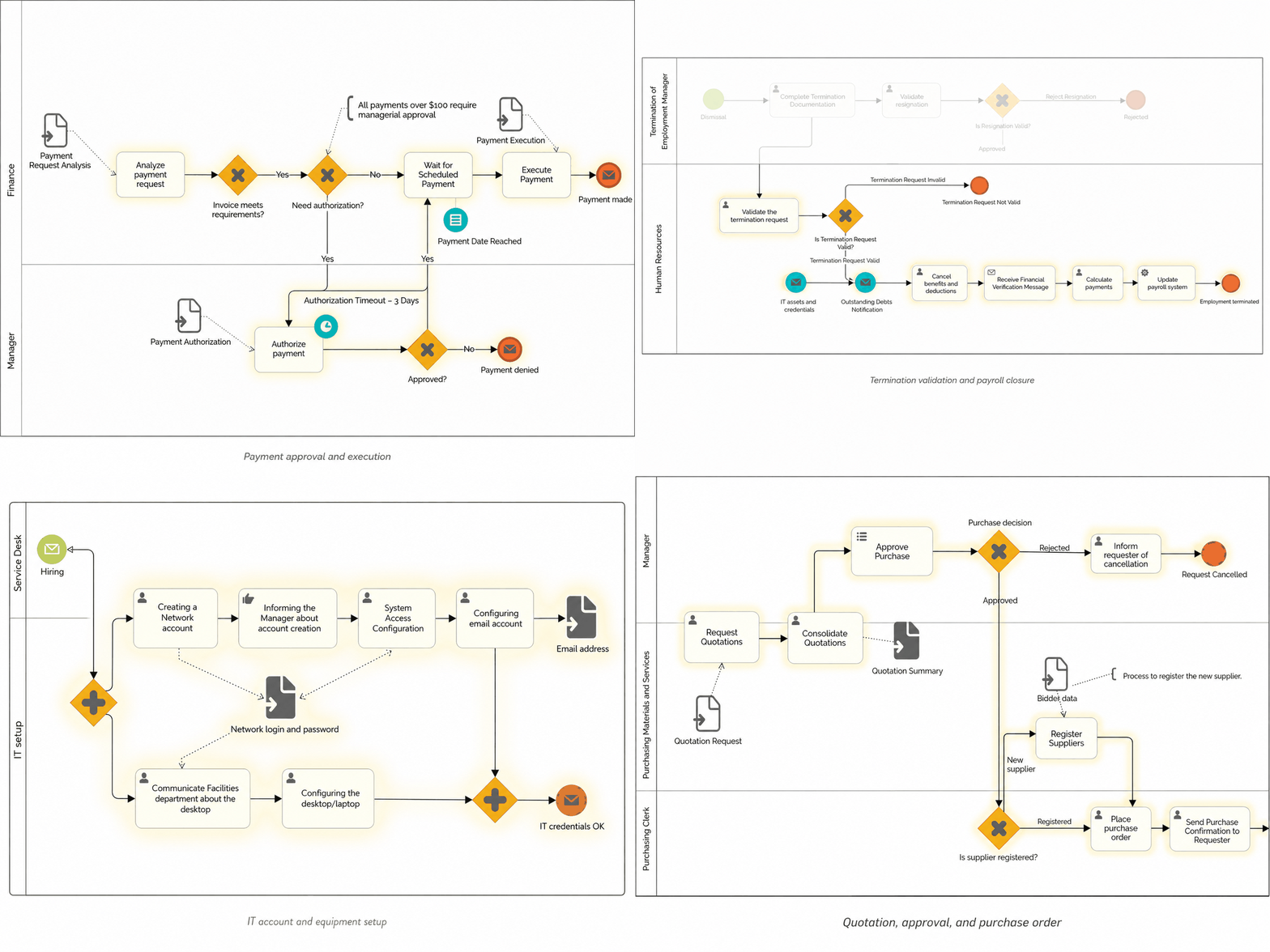
Examples help you understand how real processes are structured, how lanes are used, where gateways appear, and how activities connect from start to finish.
HEFLO provides BPMN examples that you can open, study, adapt, and reuse.
Common BPMN examples include approval workflows, purchase requests, employee onboarding, travel requests, accounts payable, incident management, customer service, supplier registration, and document approval.
A good BPMN example should show the main flow, responsibilities, decision points, exceptions, and end states clearly enough that the model can be reused or adapted to your organization.
How to create a BPMN diagram
Creating a good BPMN diagram is not just a drawing exercise. It is a process discovery and communication activity.
Define the process scope
Decide where the process begins and where it ends. Avoid trying to model everything at once.
Identify the main participants
List the roles, teams, departments, systems, customers, suppliers, or external participants involved in the process.
Map the main flow
Describe the normal sequence of work from start to finish. Focus first on the path that happens most often.
Add decisions and alternative paths
Use gateways to show where the process can follow different paths based on conditions, approvals, data, or business rules.
Validate the diagram with stakeholders
Review the diagram with people who know the work. Confirm whether the model reflects how the process actually happens and how it should happen.
Enrich the model with documentation
A diagram shows the flow. Documentation adds the knowledge behind the flow: rules, forms, systems, policies, responsibilities, instructions, and supporting information.
Start with a clear BPMN model. Build from there.

Validate BPMN before you share, publish, or automate
A BPMN diagram can look good visually and still contain modeling problems.
Common BPMN issues include unclear gateways, missing end states, confusing responsibility, inconsistent use of lanes, incorrect message flows, overloaded diagrams, or task names that are too vague.
Validation helps improve the quality of the model before it becomes part of a documentation repository, stakeholder presentation, training material, or automation initiative.
In HEFLO's BPMN ecosystem, validation should be part of a practical quality habit: model clearly, review with stakeholders, validate quality, improve readability, and then share or publish.
From BPMN diagram to professional process documentation
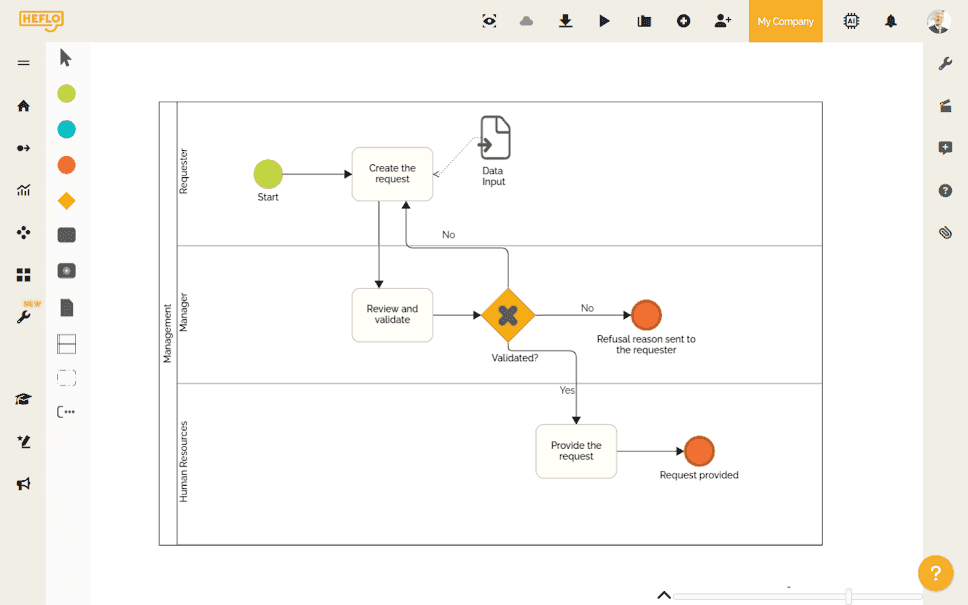
Create BPMN diagrams online
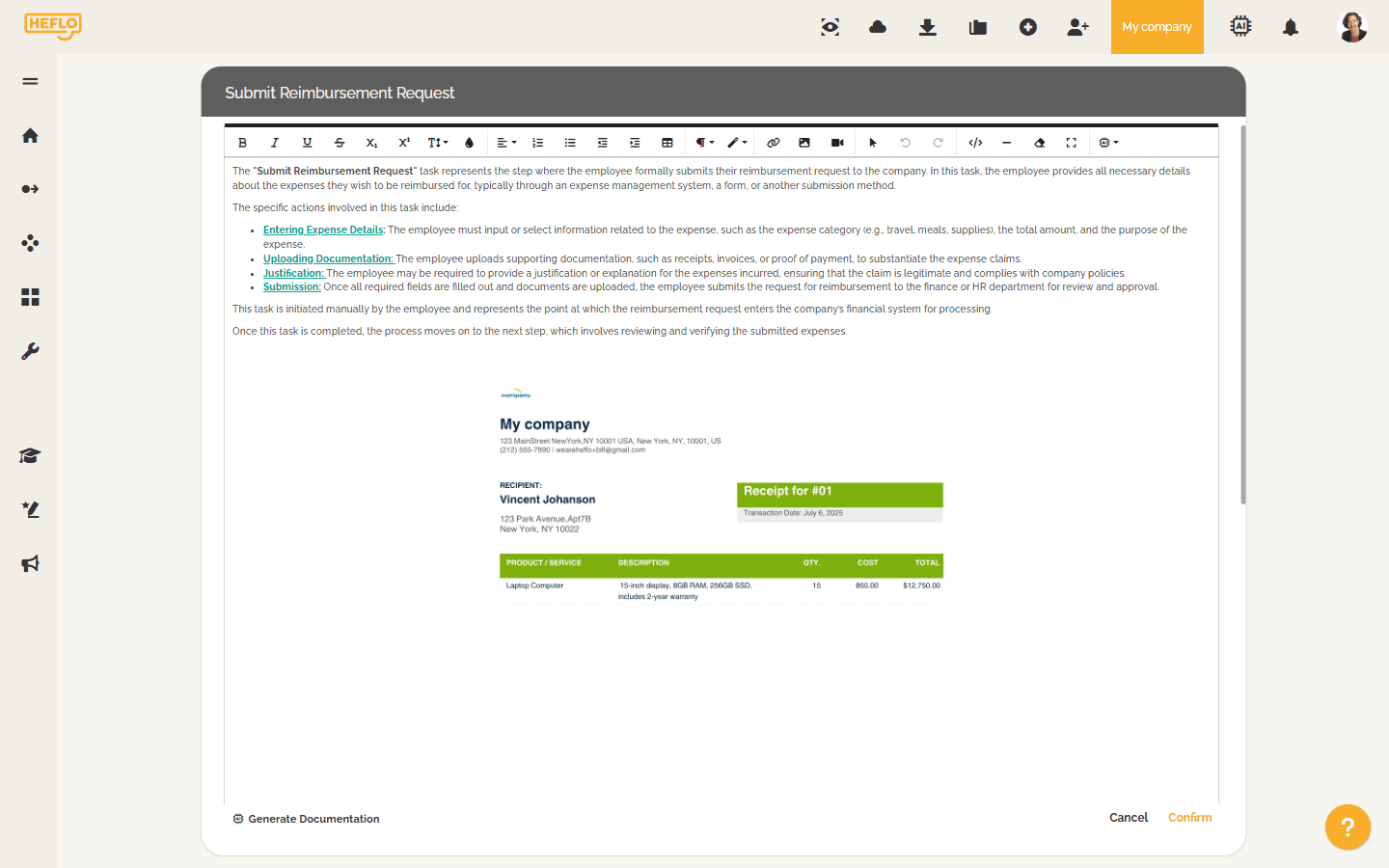
Document process knowledge in context
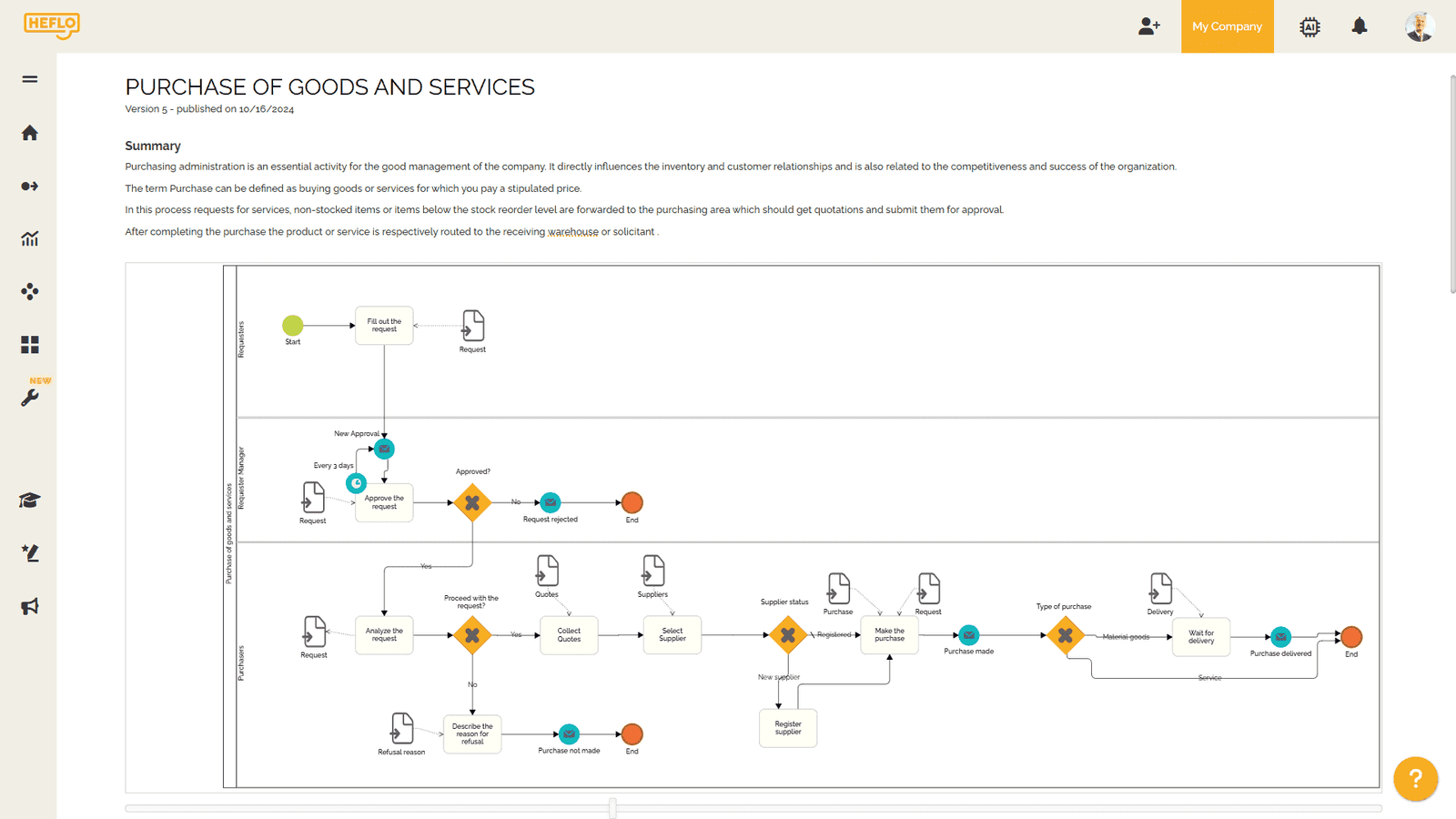
Publish approved processes
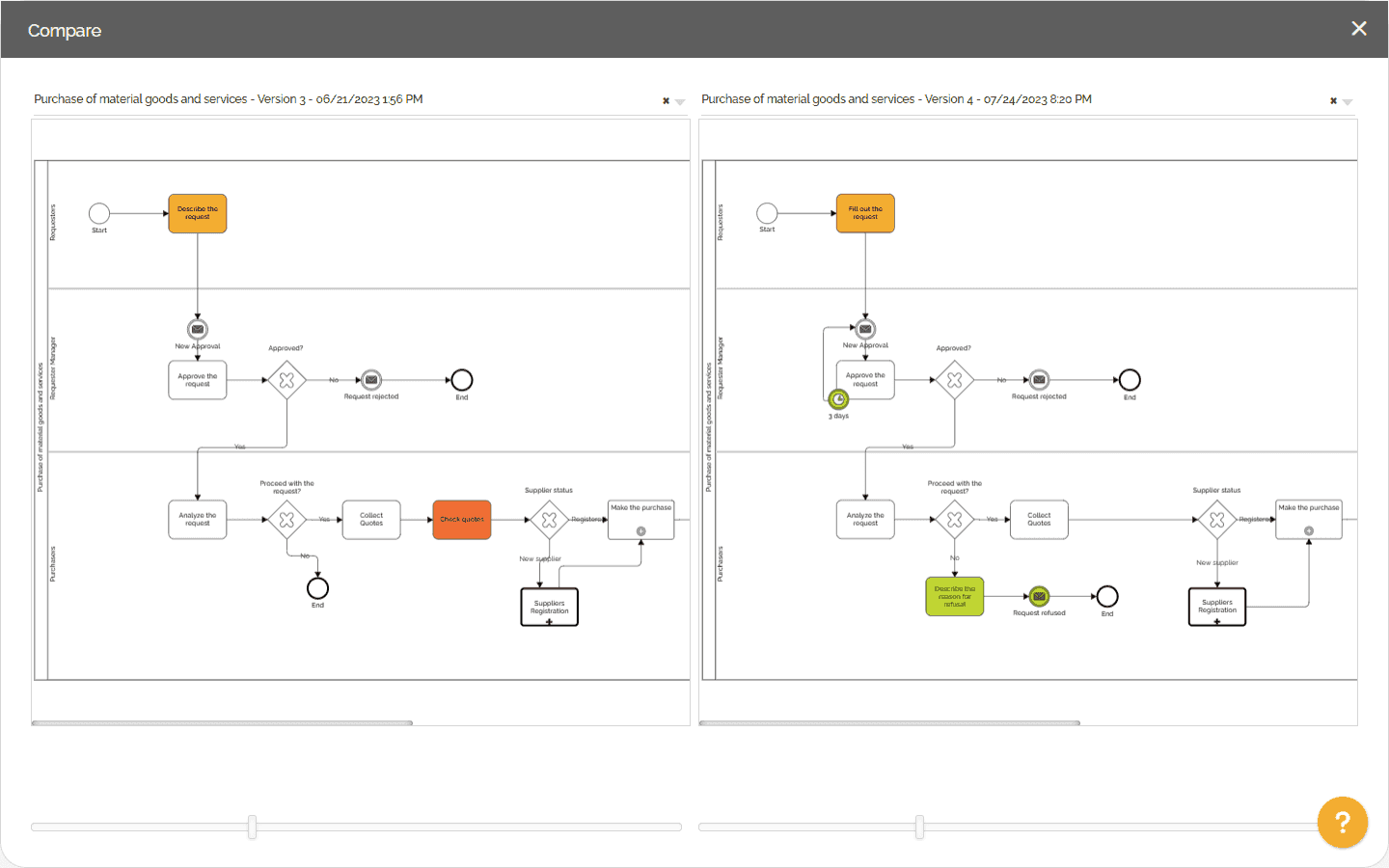
Govern changes over time
Export professional documentation

When BPMN becomes more than a diagram
Not every BPMN diagram needs to become an automated workflow.
Many BPMN initiatives should begin with learning, modeling, validation, documentation, and publication.
But some processes eventually need more control. This usually happens when the process includes recurring approvals, deadlines, handoffs, exceptions, service requests, audit requirements, or operational visibility needs.
In those cases, BPMN can become the bridge from process understanding to controlled execution.
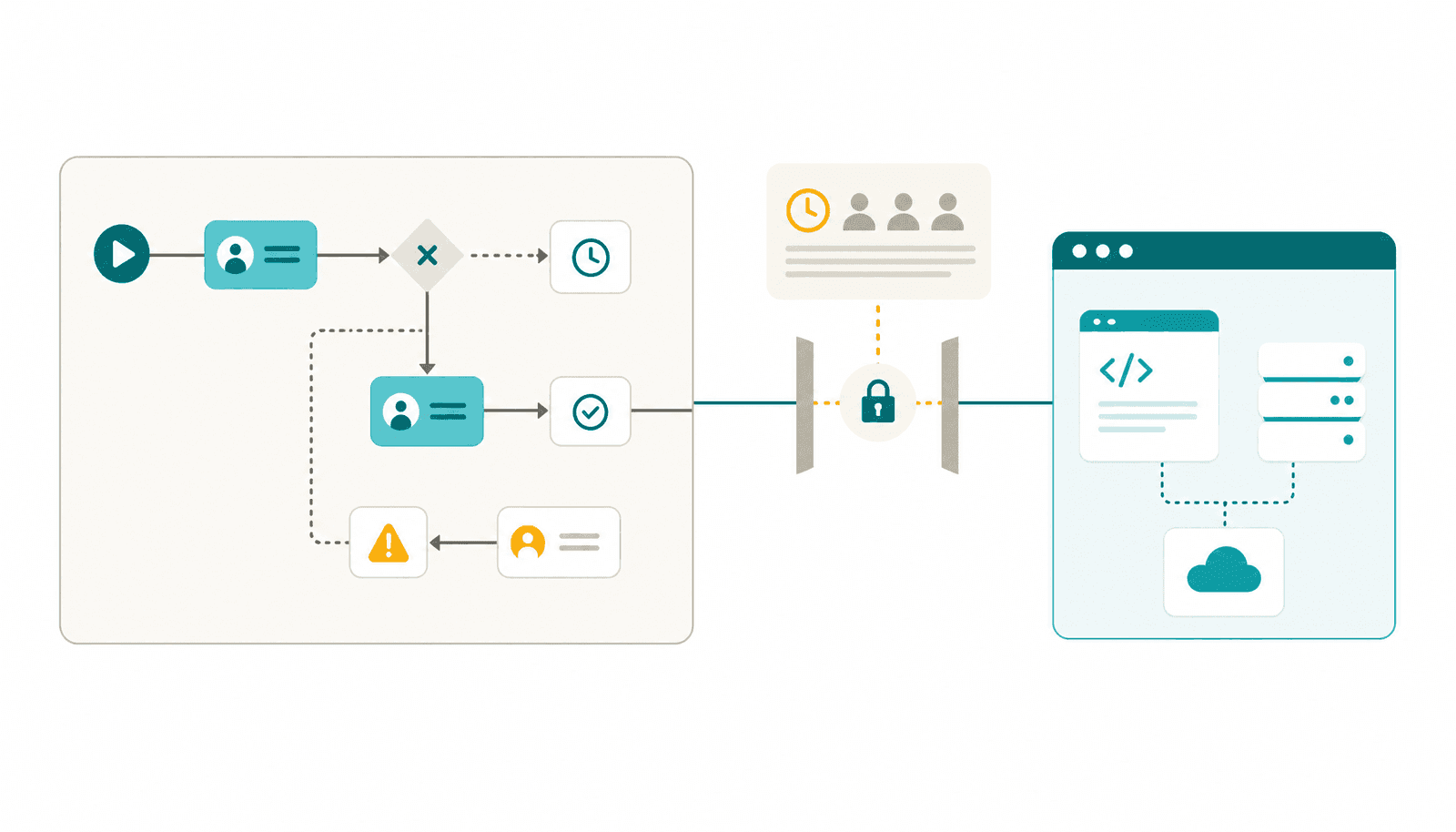
In HEFLO, process analysts lead the implementation and configure the business process logic themselves, including steps, responsibilities, routing, forms, approvals, deadlines, alerts, and exception paths, with IT supporting them on architecture, integrations, security, identity, infrastructure, and enterprise standards.
What you can do with BPMN in HEFLO
HEFLO helps BPMN become more than a drawing exercise by connecting modeling, examples, validation, documentation, publication, governance, and optional execution in one process environment.

Understand the notation with practical explanations, examples, and learning resources.

Create BPMN diagrams in an online editor designed for professional process modeling.

Open and adapt real BPMN examples instead of starting from a blank page.

Check your BPMN diagrams before sharing, publishing, or turning them into more formal process assets.

Add descriptions, rules, responsibilities, systems, forms, attachments, and supporting information.

Make approved processes available in a process portal for teams and stakeholders.

Control process versions, permissions, approvals, and updates over time.

Move selected processes toward controlled workflow execution when deadlines, approvals, exceptions, and traceability become necessary.