Process Analyst Automation
Business process automation for process analysts
HEFLO helps process analysts turn process knowledge into executable BPMN workflows with rules, approvals, deadlines, exceptions, visibility, and governance.


Process analysts should not stop at documentation
Many teams can map a process, document a process, or draw a workflow. The harder step is turning that process knowledge into controlled execution.
In many organizations, this is where the gap appears: process analysts understand the logic, but automation depends on technical teams, custom configuration, or development backlog.
HEFLO helps bridge that gap by allowing structured process logic to be modeled and executed in one platform.
The people who understand the process should be able to help define how it runs.
Where process automation becomes too dependent on technical implementation
Automation projects often start with business knowledge, but lose speed when every rule, deadline, approval, exception, or form change requires technical implementation.
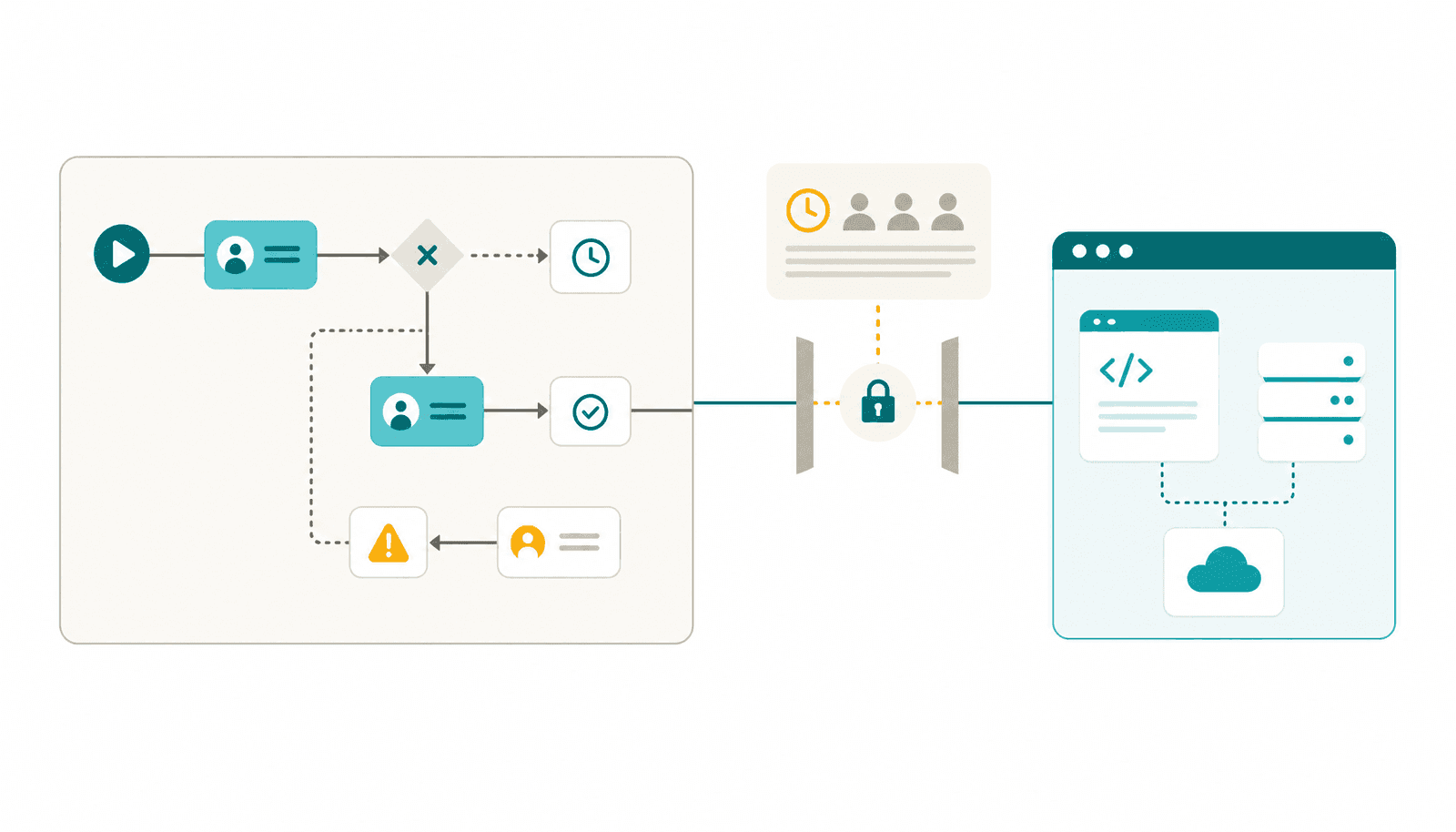
What process analysts need from an automation platform
A process analyst needs more than a drawing tool and more than a task list. Structured automation requires a way to model, configure, run, monitor, and improve the process.

The process model should guide how work runs, not only describe it.

Routing and decisions should follow clear conditions that business teams can understand.

Approvals should be structured, traceable, and aligned with process rules.

The process should control both final deadlines and task-level deadlines.

Workflow behavior can be configured visually for everyday changes, without developer coding.

Users should capture the information needed to execute the process correctly.

Analysts and managers should see status, bottlenecks, and execution risks.

The process should preserve who acted, when, and why.

Process changes should be controlled, versioned, and aligned with organizational standards.
Reduce development dependency without weakening IT governance
Process automation should not turn every business adjustment into a technical implementation request.
IT remains essential for architecture, integrations, security, infrastructure, identity, and enterprise standards. These decisions need technical governance.
But process analysts should be able to configure the process logic they understand: steps, routing, responsibilities, approval paths, deadlines, forms, alerts, and controlled exception paths.
With HEFLO, business teams gain autonomy where process logic matters, while IT stays involved where technical decisions matter.
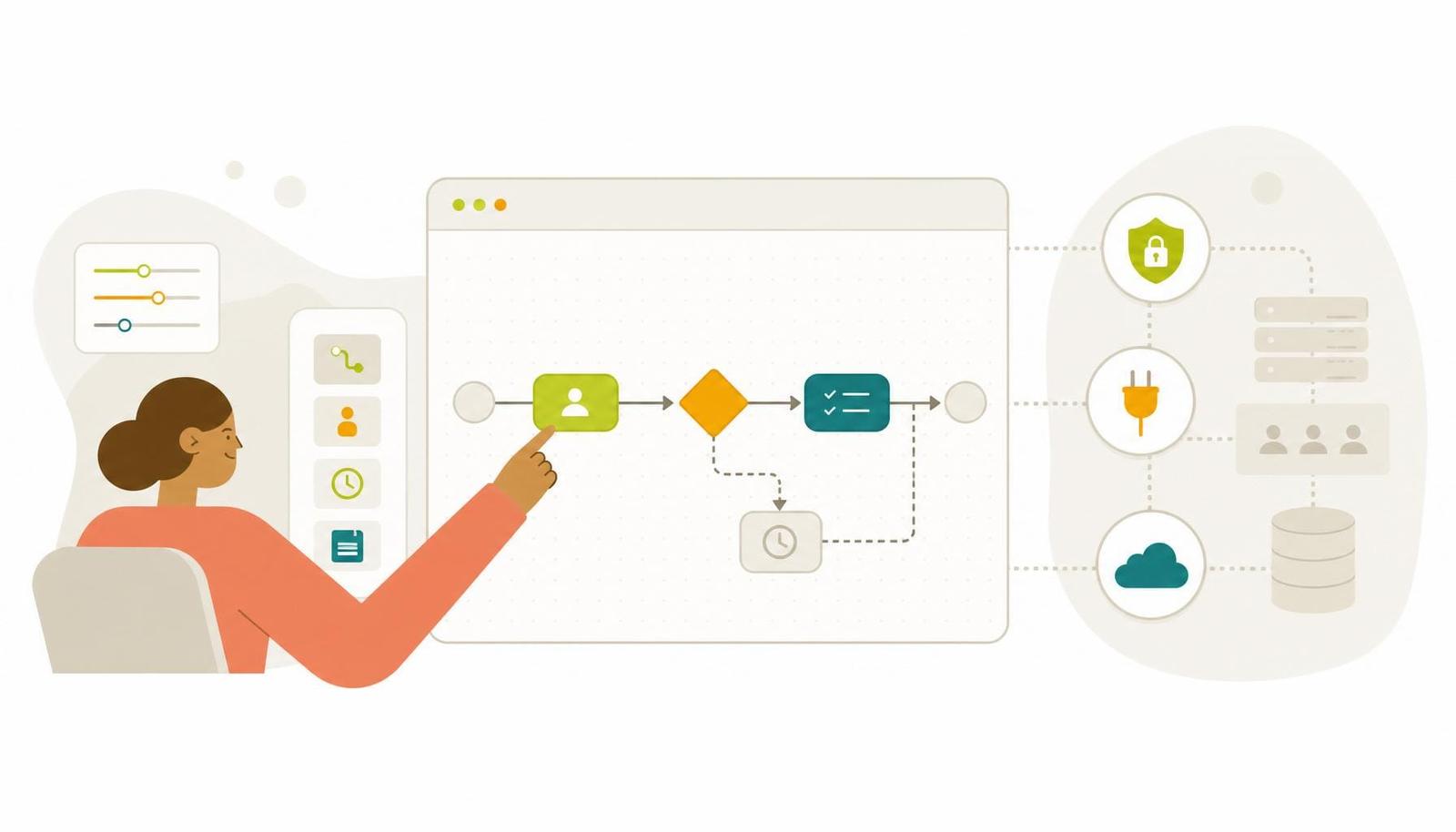
BPMN should do more than document the process: it should help run it
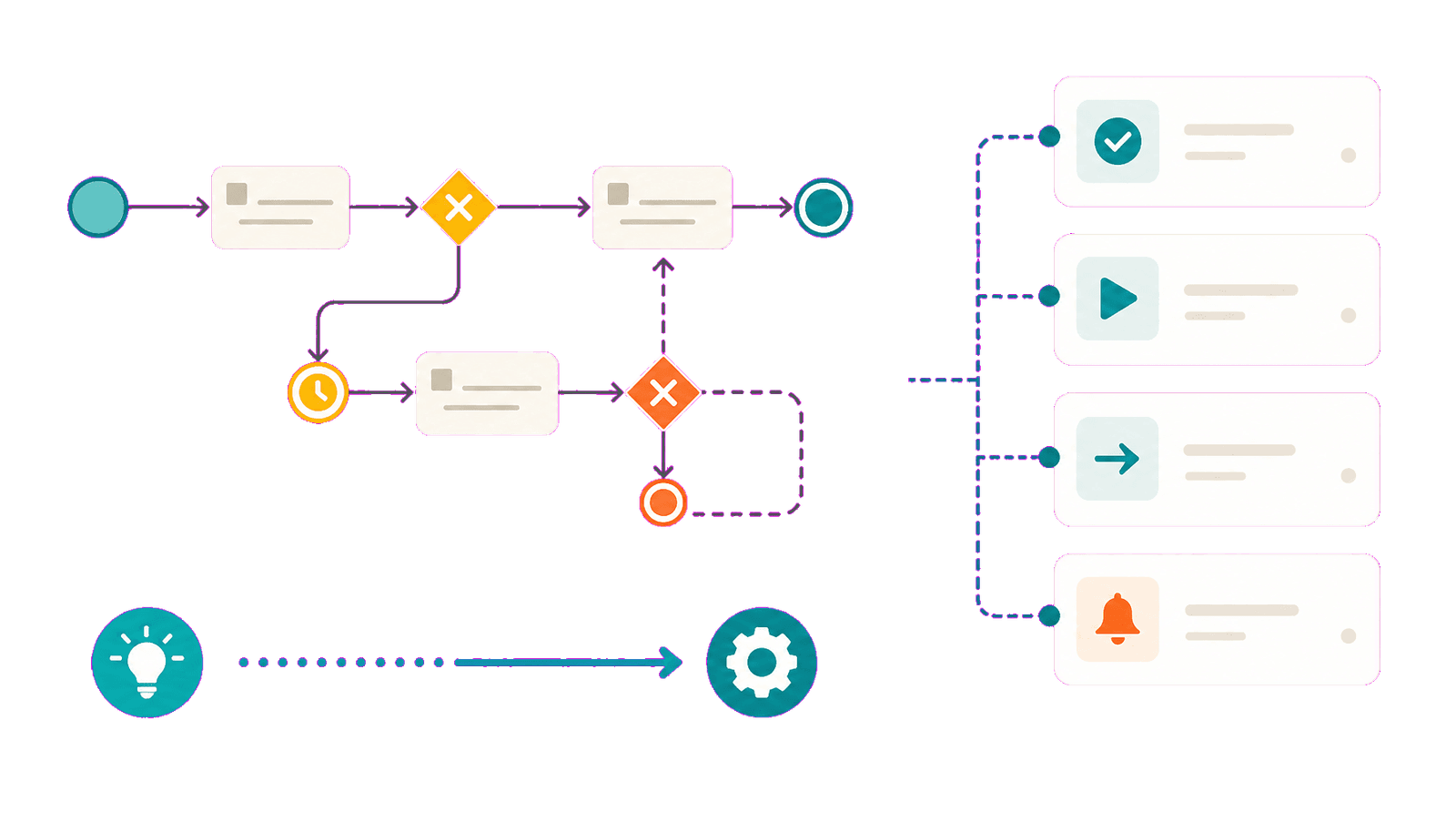
For process analysts, BPMN is valuable because it can represent real process logic: activities, decisions, gateways, events, handoffs, approvals, deadlines, escalation logic, parallel work, and controlled exception paths.
When BPMN is connected to execution, the model becomes more than a diagram. It becomes a practical bridge between business understanding and workflow automation.
BPMN helps process analysts move from describing work to designing executable process logic.
From no-code configuration to low-code collaboration
Process automation should not require development work for every relevant implementation.
With HEFLO, process analysts can configure many workflow behaviors without code, including steps, forms, responsibilities, routing rules, approval paths, deadlines, alerts, and exception flows.
For specific customizations that do not require deep integration with corporate systems, HEFLO services can support the implementation without turning the initiative into a full software project.
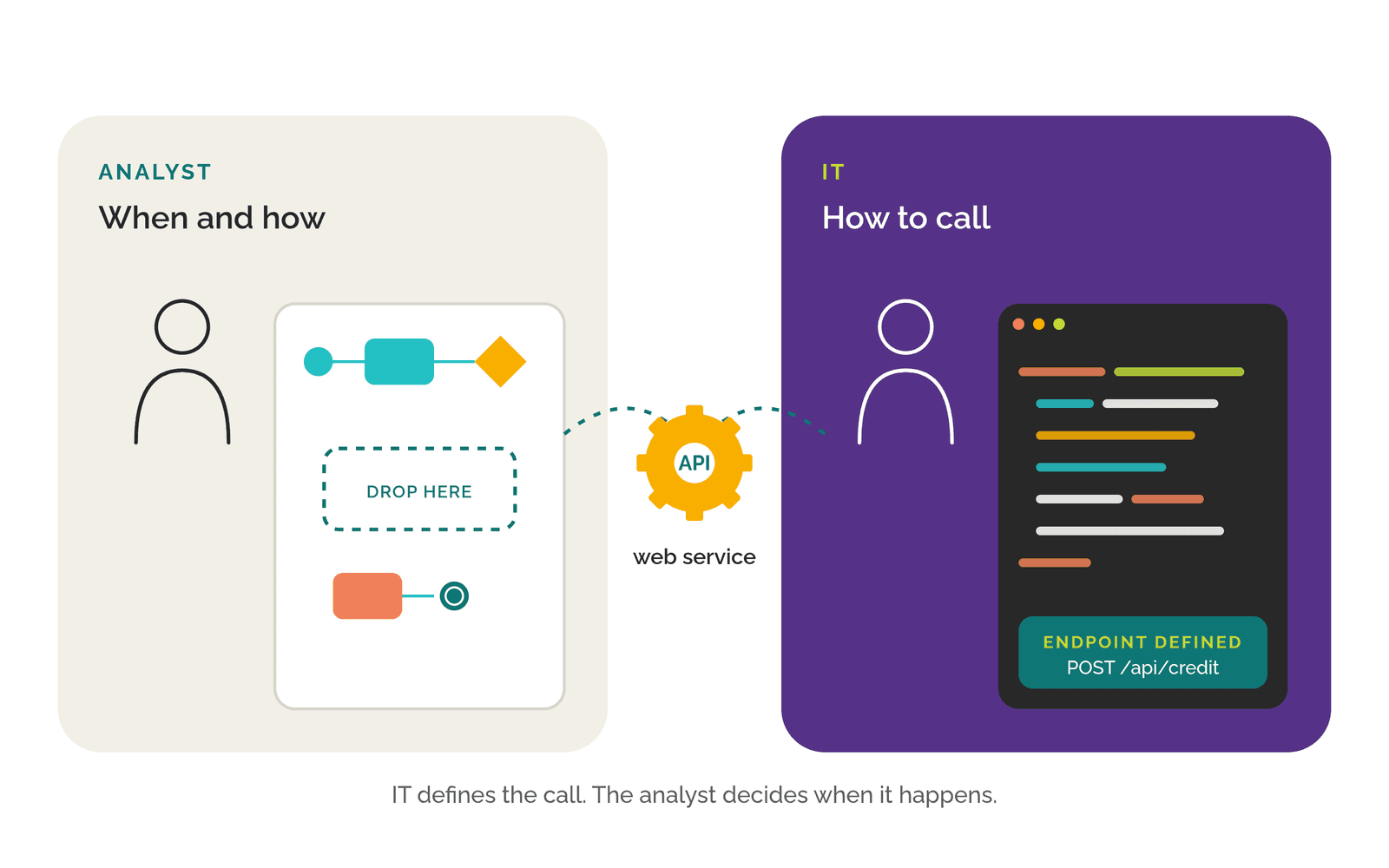
In low-code scenarios, analysts can also work with IT at the right level. For example, IT may define how a web service should be called, while the analyst configures when that call happens in the process and how the result affects the workflow.
This helps business teams automate more process logic directly, while keeping IT involved where technical governance matters.

Turn process knowledge into process execution
Process analysts already understand how work should move. HEFLO helps translate that knowledge into executable workflows with rules, deadlines, approvals, exceptions, traceability, and governance, without making every change depend on development work.
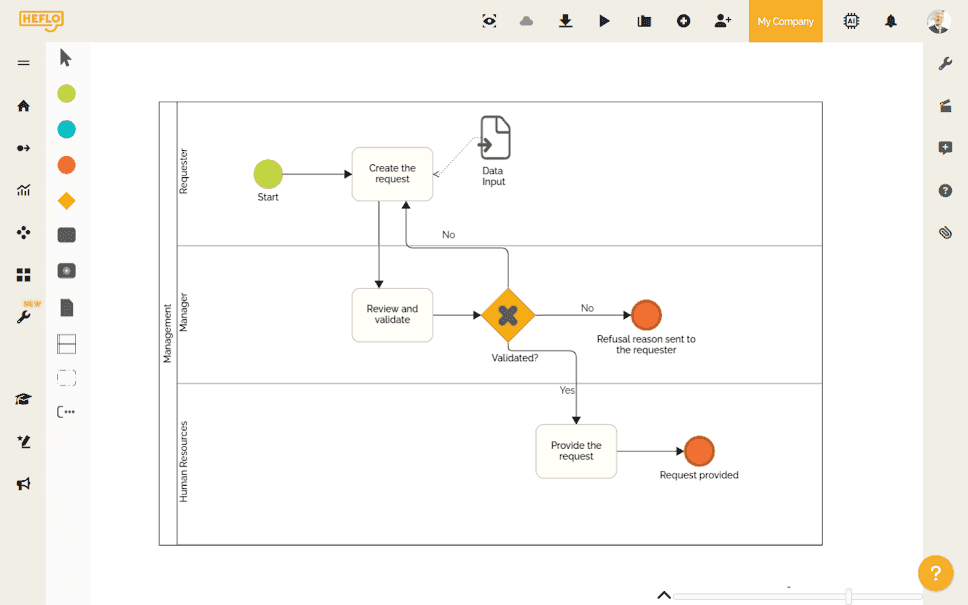
Model structured processes in BPMN
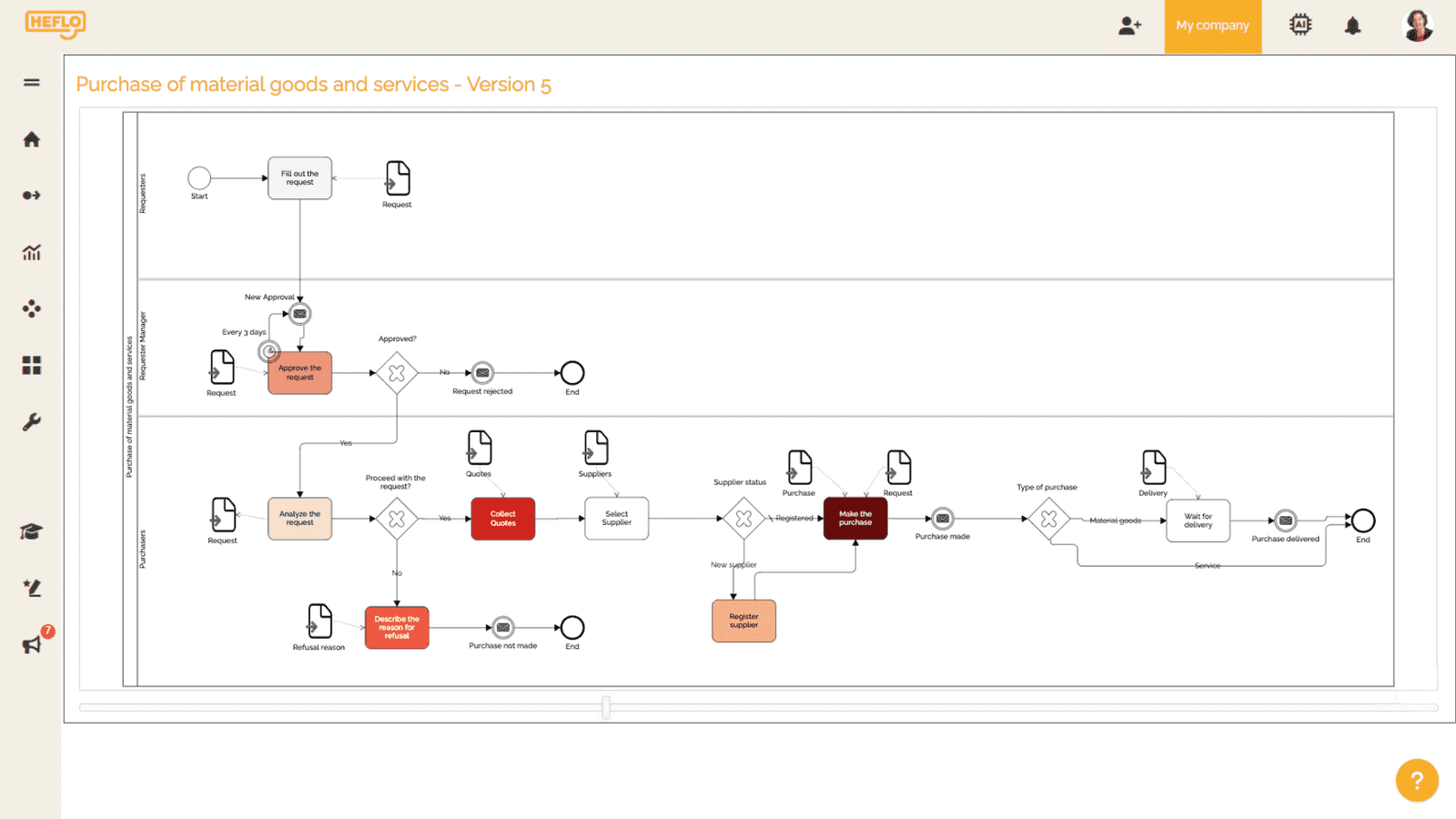
Use BPMN to represent tasks, decisions, events, handoffs, approvals, deadlines, and exception paths in a process model that business and IT can understand.
Turn models into executable workflows
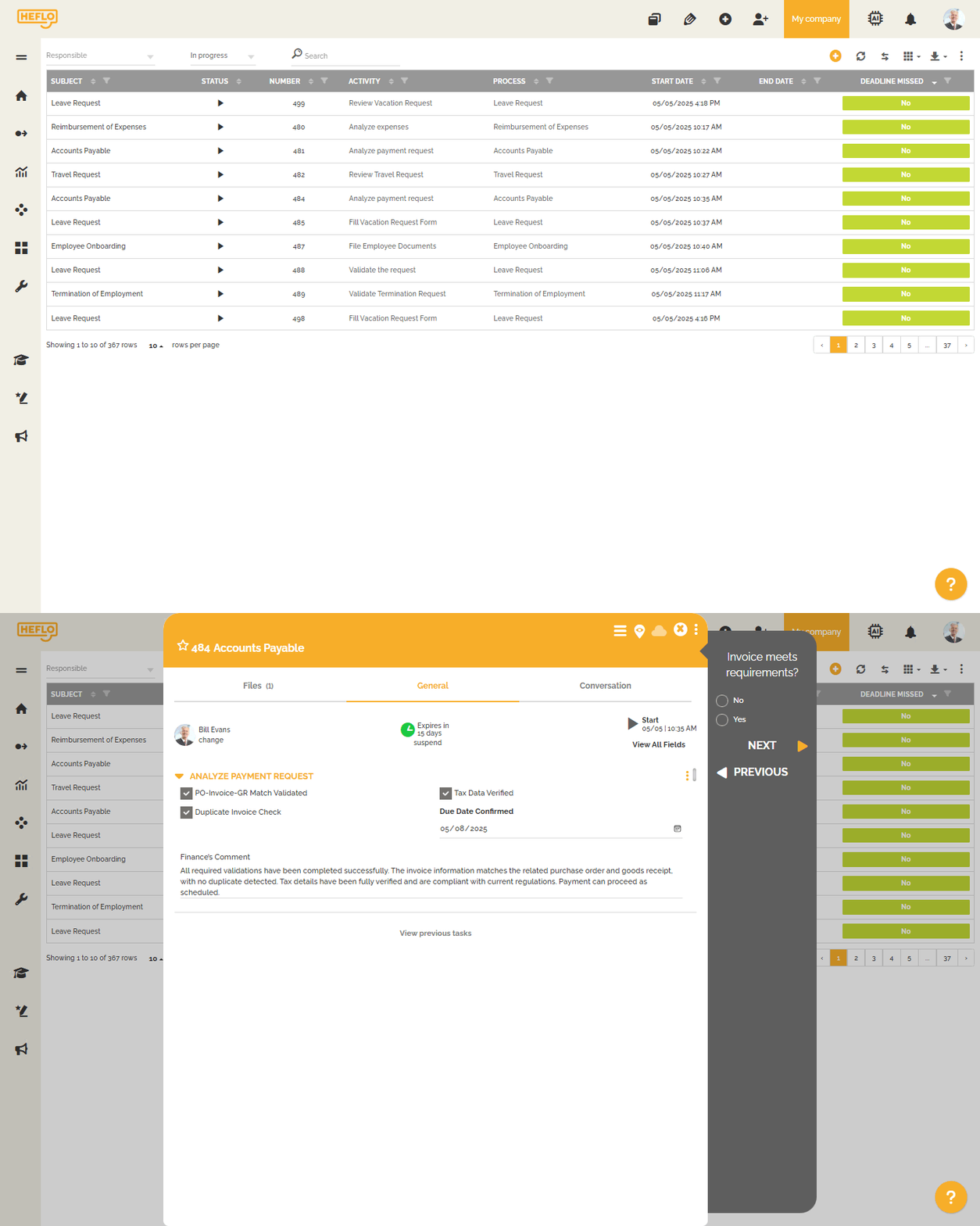
Move from process design to process-driven execution in the same platform, so the model can guide how work is assigned, routed, controlled, and monitored.
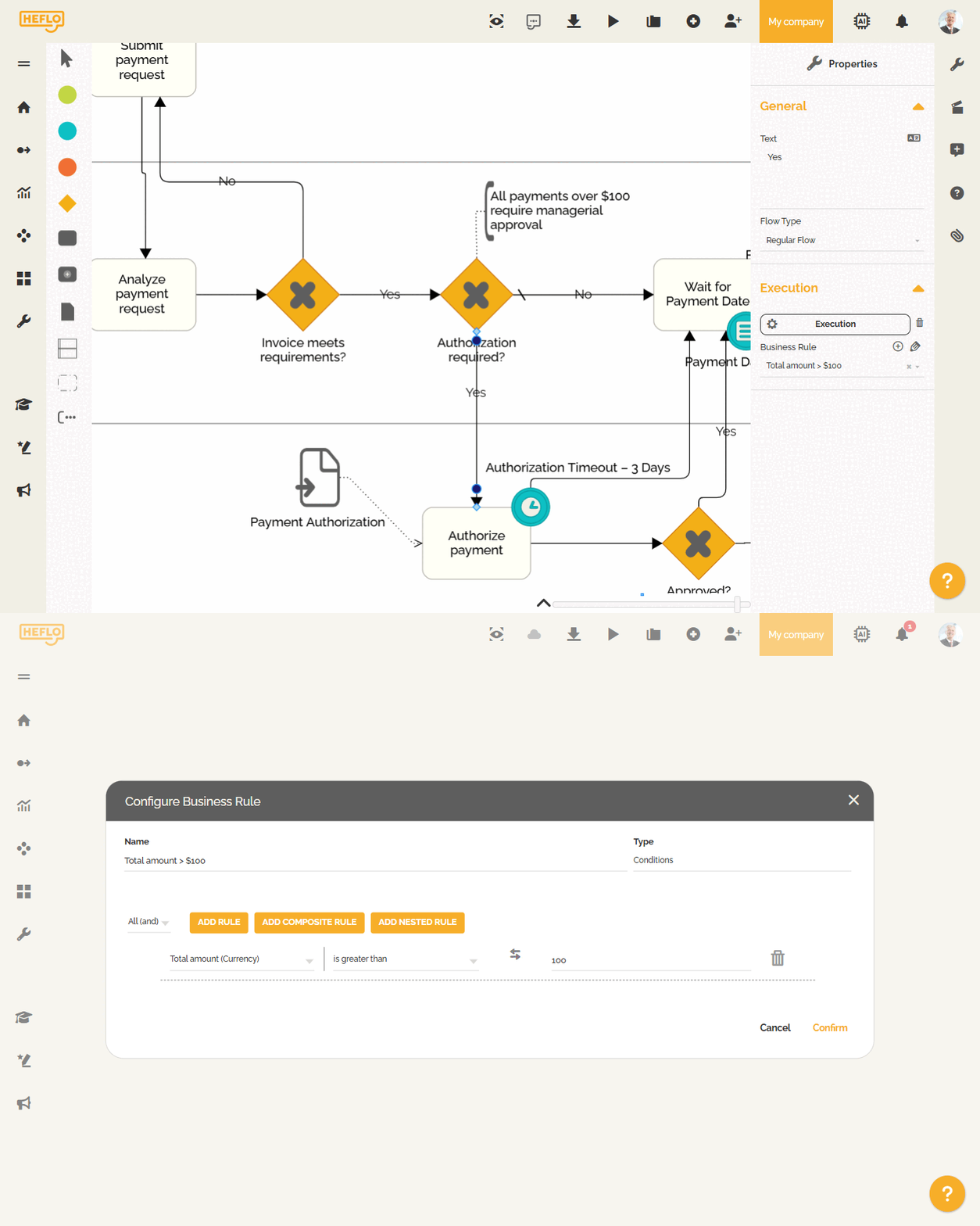
Configure business rules and routing
Define how work moves based on conditions, roles, decisions, responsibilities, and process data, keeping business logic visible and easier to evolve.
Automate approvals with traceability
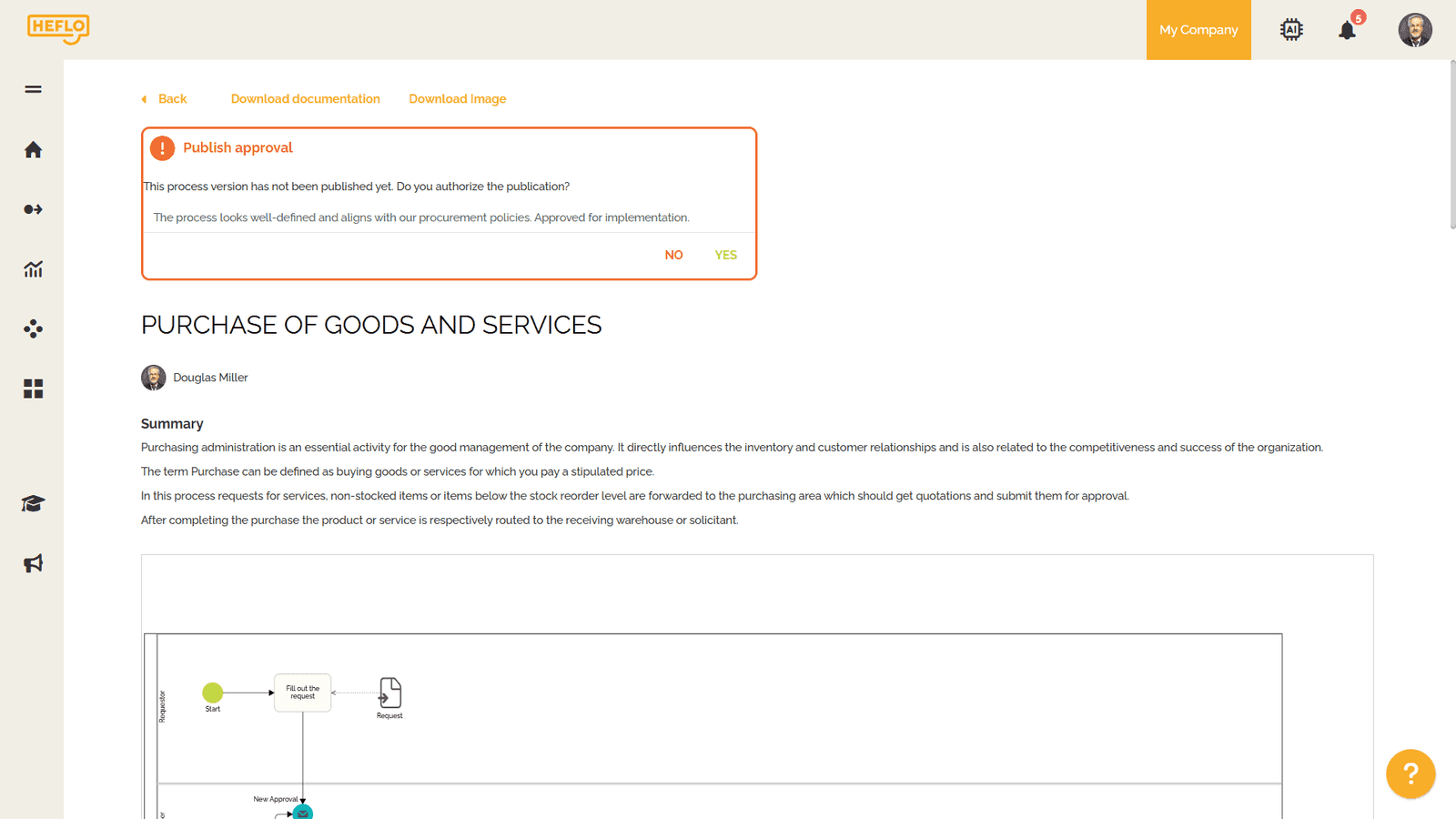
Structure approval paths and preserve who approved, rejected, requested changes, or acted on each case, with the process history available for review.
Control deadlines and escalations
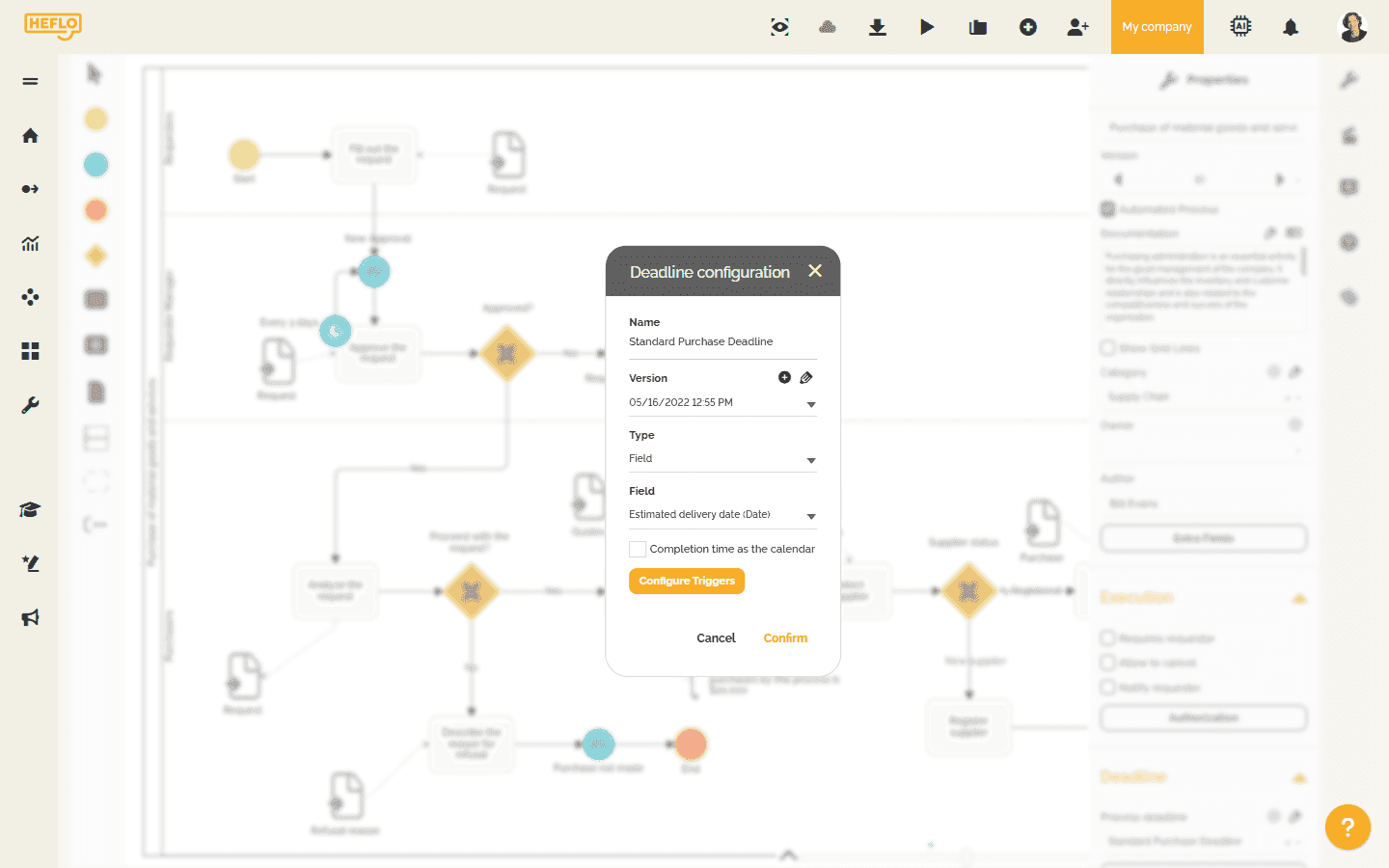
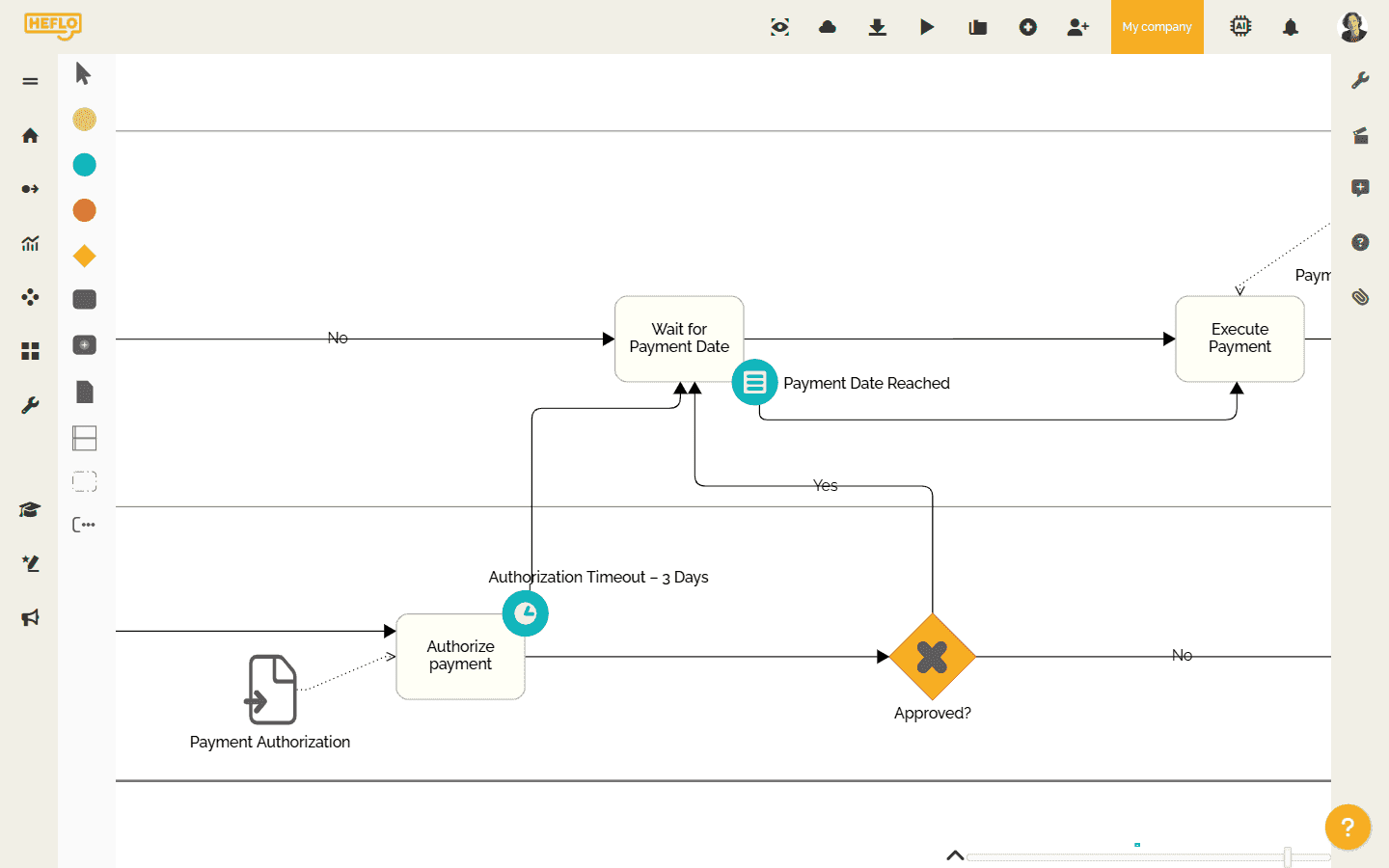
Define process deadlines, task deadlines, progress-based alerts, and escalation rules so late or blocked work becomes visible before it damages execution.
Manage exceptions inside the process
Give non-standard cases controlled paths instead of side conversations, undocumented decisions, and workarounds that weaken governance.
Improve with visibility and execution data
Monitor status, delays, bottlenecks, volumes, and process performance over time using operational data generated by process execution.
Ready to help process analysts turn process knowledge into execution?
Schedule a demoTeams use HEFLO to bring process knowledge, automation, and execution control together.
Frequently asked questions about business process automation for process analysts
Business process automation for process analysts is the practice of turning process knowledge into executable workflows. It allows analysts to help define steps, rules, approvals, deadlines, exceptions, forms, visibility, and traceability so the process can run in a controlled way.
Task automation automates isolated actions. Workflow automation routes work through a sequence of steps. Structured business process automation executes an end-to-end process with roles, business rules, deadlines, approvals, exceptions, visibility, traceability, and governance.
Process analysts can configure many aspects of business process logic when the platform is designed for business configuration, including steps, routing, rules, forms, approvals, deadlines, alerts, and exception paths. IT should still be involved for integrations, architecture, security, identity, infrastructure, and enterprise governance.
No. The goal is not to remove IT from process automation. The goal is to let business and IT work at the right level. IT supports technical governance, integrations, security, and standards, while process analysts configure the business logic they understand when appropriate.
BPMN helps process analysts represent activities, gateways, decisions, events, handoffs, approvals, deadlines, parallel work, escalations, and exception paths. When connected to execution, BPMN becomes a bridge between process understanding and workflow automation.
Business teams should be able to configure process logic they understand, such as steps, responsibilities, routing conditions, forms, approval paths, deadline rules, alerts, escalations, and controlled exception paths, within governance limits defined by the organization.
HEFLO supports deadline control by allowing teams to define deadlines for the overall process and for individual tasks or steps. Alerts can be configured according to deadline progress, including warning, critical, and overdue states, with escalations when work deviates from the expected pattern.
Management by exception means managers do not need to monitor every task manually. The workflow follows predefined process logic, while managers are alerted when a case is late, blocked, escalated, rejected, or otherwise deviates from expected execution.
Process analyst-led automation is useful for BPM teams, operations, shared services, finance operations, HR operations, procurement, transformation teams, process owners, and IT teams that want business users to configure process logic safely within governance standards.
No. HEFLO is positioned for process-driven automation. It helps organizations model structured business processes and execute them with BPMN, business rules, approvals, deadlines, exceptions, visibility, traceability, and governance.
Many low-code initiatives start fast but become difficult to maintain when business logic is spread across scripts, isolated apps, hidden rules, or disconnected integrations. HEFLO reduces this risk by keeping process logic visible in a structured BPMN model, where routing, responsibilities, deadlines, approvals, and exceptions can be understood and managed as part of the process itself. This helps process analysts improve automation without turning every change into a fragile workaround or a separate technical artifact.
Yes. HEFLO is designed to give process teams more autonomy while preserving governance. Business users can work on the process logic they understand, while IT and governance teams can remain involved in integrations, security, standards, and platform control. This balance matters because one recurring concern in low-code adoption is that fast departmental automation can create shadow apps, poor version control, and support problems when there are no clear boundaries. HEFLO supports a more controlled model where automation remains connected to documented, governed, and executable business processes.
Process visibility is important because automation should not only move tasks forward; it should also show what is happening, where work is delayed, who is responsible, and how the process is performing. In HEFLO, automation is connected to process execution, so organizations can manage work with greater traceability, including status, responsibilities, deadlines, SLAs, and process progress. This is especially relevant for business processes with approvals, handoffs, branching paths, and exceptions, where coding the flow directly or spreading it across tools can make the process harder to understand and improve over time.
Yes. HEFLO can support different adoption models depending on the customer's internal capacity and project needs. Some organizations prefer to configure and evolve their own processes, with HEFLO providing guidance and support when needed. Others may choose to hire HEFLO's team to implement the initial automation, especially when the process is strategic, urgent, or requires a more structured rollout.
In both cases, the goal is not to make the customer permanently dependent on developers or consultants. After the initial implementation, process analysts can often take ownership of routine evolution and maintenance, such as adjusting steps, responsibilities, routing rules, deadlines, forms, alerts, and controlled exceptions. This allows companies to start with expert support when needed, while still building long-term autonomy for continuous process improvement.