Business Process Management
Business Process Management Software for End-to-End Process Control
Every organization has processes. The challenge is making them visible, consistent, governed, and executable.
HEFLO helps you model, document, govern, publish, execute, and improve business processes in one process-driven platform.


Turn scattered work into structured, visible, and continuously improved processes
Business Process Management helps organizations standardize how work is performed, make responsibilities clear, connect documentation with execution, and give managers visibility into deadlines, exceptions, and performance.
Instead of relying on memory, email, spreadsheets, and informal follow-up, BPM creates a governed way to design, run, and improve how work happens.
When organizations start needing Business Process Management
BPM becomes necessary when processes are no longer just local routines, but cross-functional work that must be standardized, governed, executed, and improved.
What Business Process Management includes
Business Process Management covers the full lifecycle of how work is designed, controlled, executed, measured, and improved.

Identify the processes that matter most to customers, operations, compliance, and strategy.

Organize processes into a clear structure so teams understand how work connects across the organization.

Represent activities, roles, decisions, events, and handoffs using visual process models such as BPMN.

Document instructions, rules, responsibilities, forms, systems, and supporting information in context.

Control ownership, versions, permissions, approvals, publication, and change history.

Make approved process knowledge available through a central portal so people can find and follow it.

Turn process logic into executable workflows with tasks, forms, routing, deadlines, and alerts.

Use execution data to identify delays, bottlenecks, exceptions, and improvement opportunities.
The BPM lifecycle, explored
Click any phase to see what it looks like in practice
Phase 01 · Discover
Understand how work happens today
Map the current state by interviewing the people who do the work. Find inconsistencies, hidden steps, and the places where standardization will create the most leverage.
Key activities
- 1Interview process participants
- 2Map the as-is flow
- 3Identify pain points and waste
- 4Prioritize processes for modeling
Business Process Management vs Workflow Automation
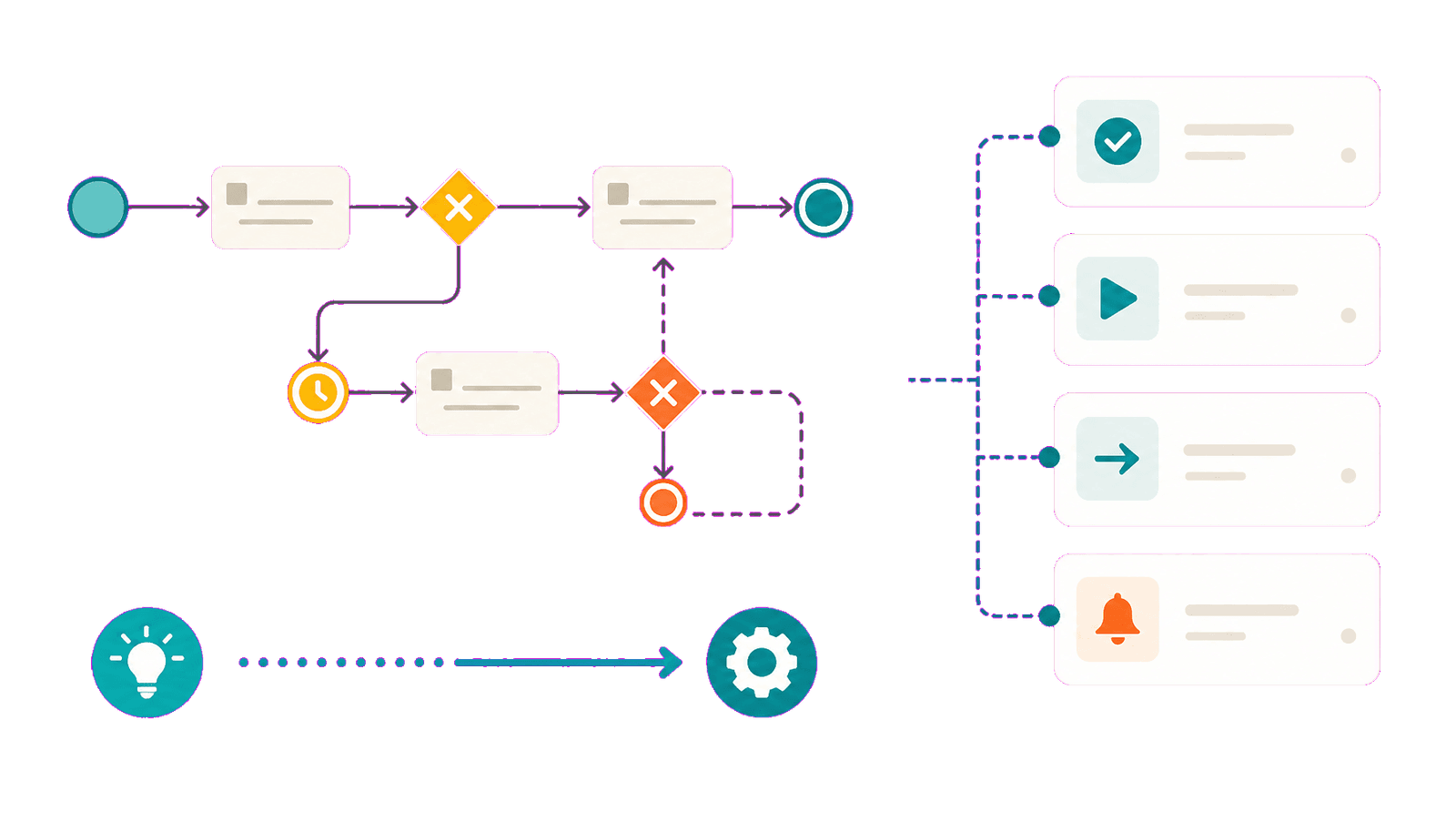
A workflow tool can solve a simple approval or task sequence. BPM goes further by helping teams understand the process, document the standard, control versions, define responsibilities, publish approved knowledge, execute the flow, handle exceptions, and improve continuously.
Automation is part of BPM, but BPM is the broader discipline that keeps automation aligned with process knowledge, governance, and operational performance.
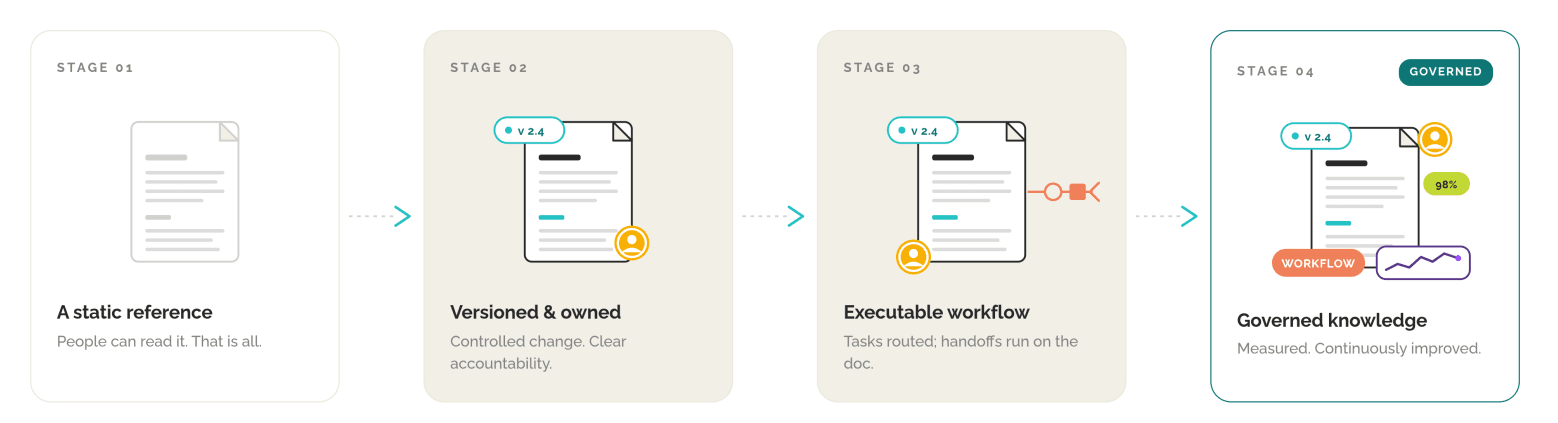
From document to governed knowledge
Business Process Management vs Process Documentation
Documentation gives people a shared understanding of procedures, rules, and standards. It becomes stronger when connected to version control, ownership, workflow execution, and performance monitoring — moving organizations from static documentation to governed process knowledge that guides daily execution.
See Business Process Management working in HEFLO

Turn process knowledge into operational control
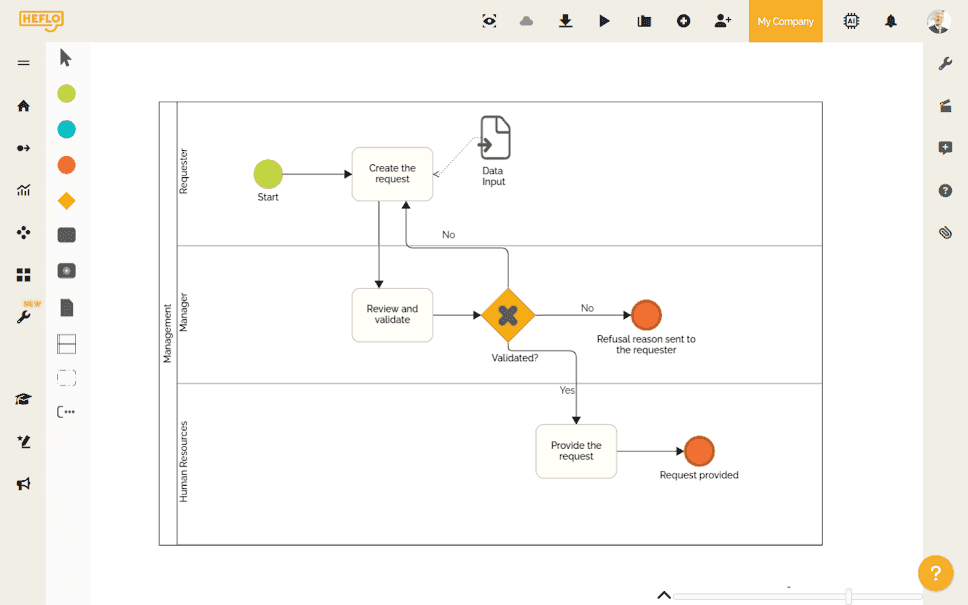
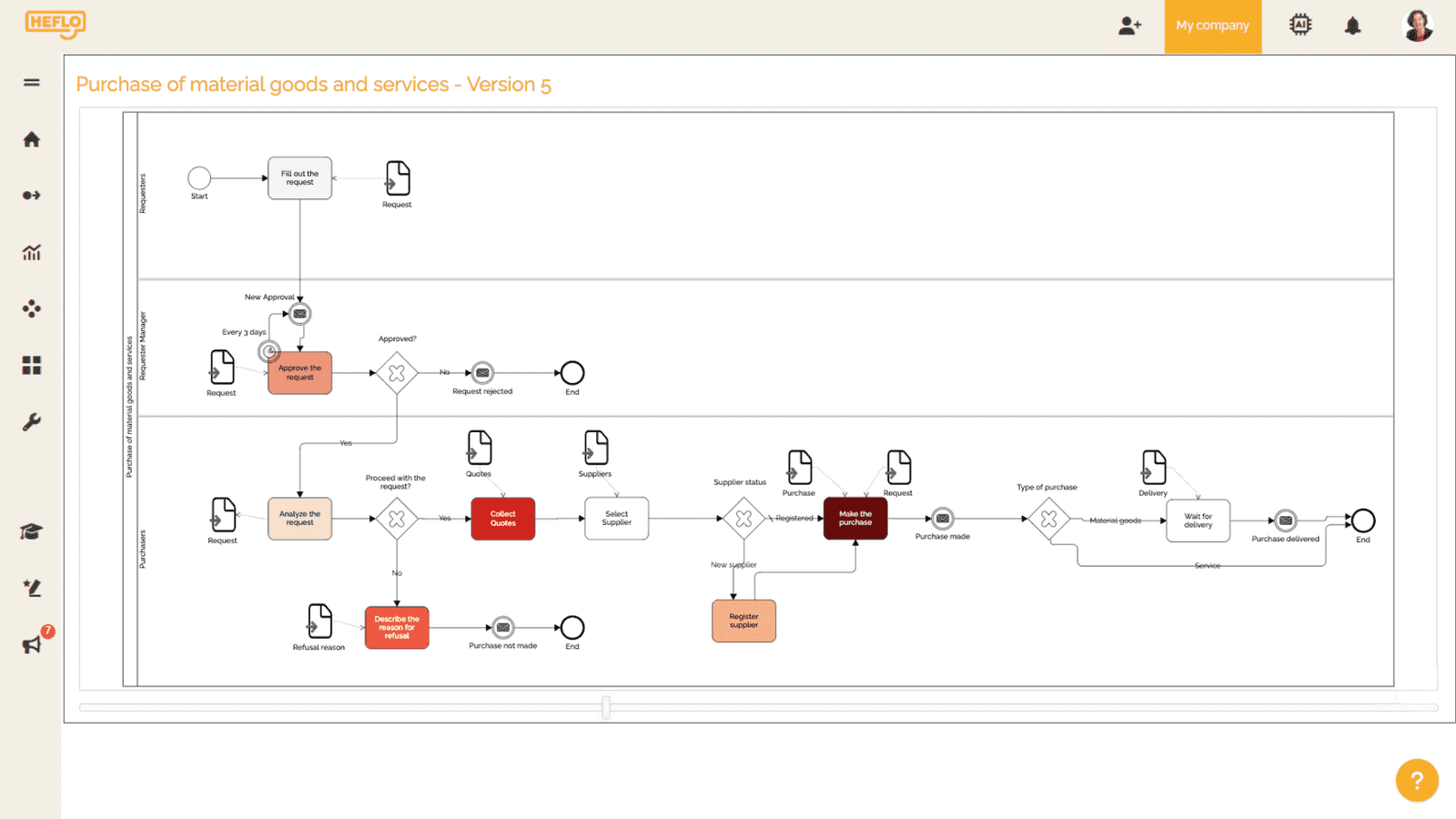
Model processes with BPMN
Design structured process flows with roles, decisions, events, deadlines, and responsibilities. Explore the BPMN tool to see how modeling becomes the foundation of governed execution.
Document procedures in context
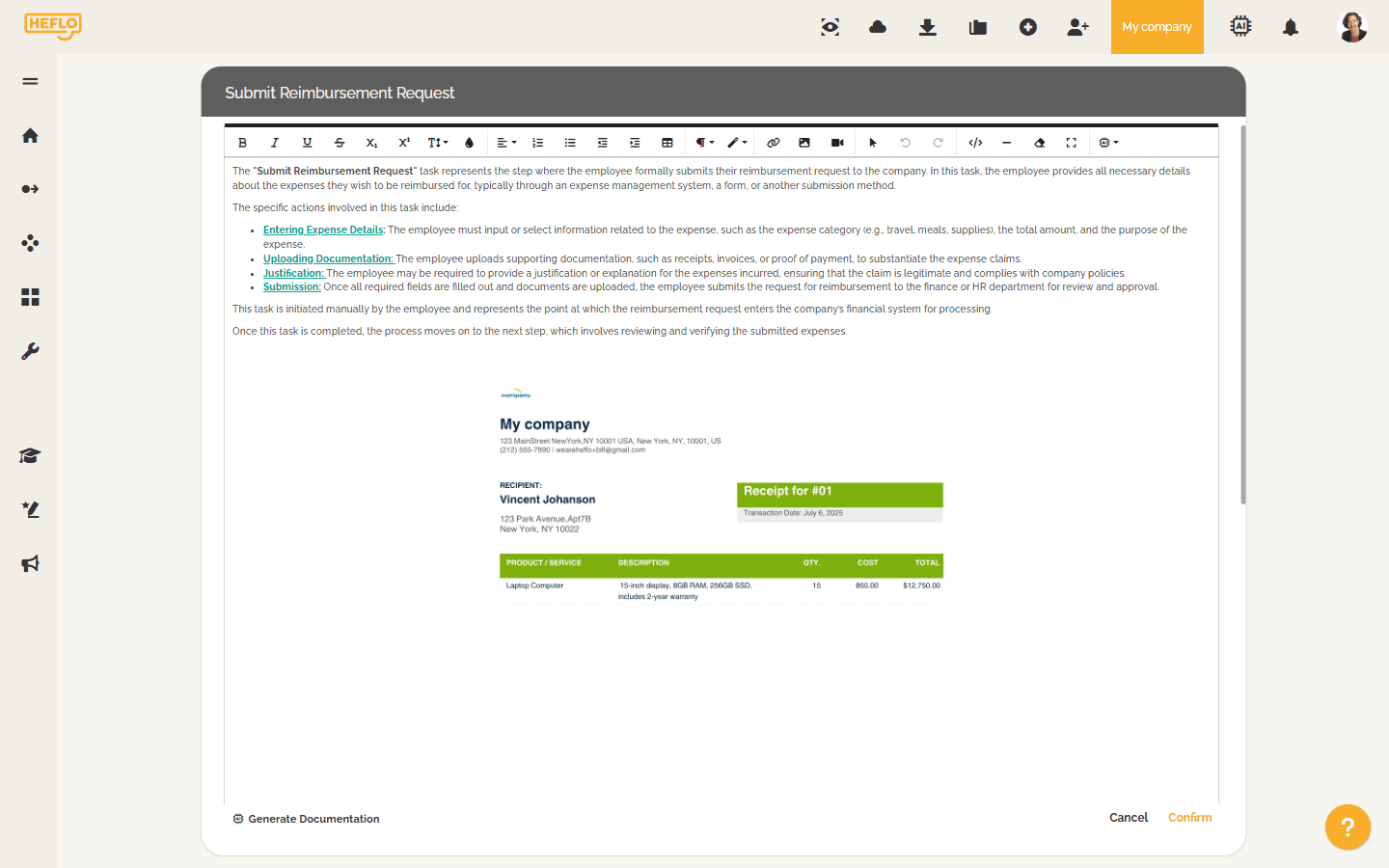
Add instructions, business rules, forms, systems, roles, and supporting information directly to the process so documentation never lives apart from the work it describes.
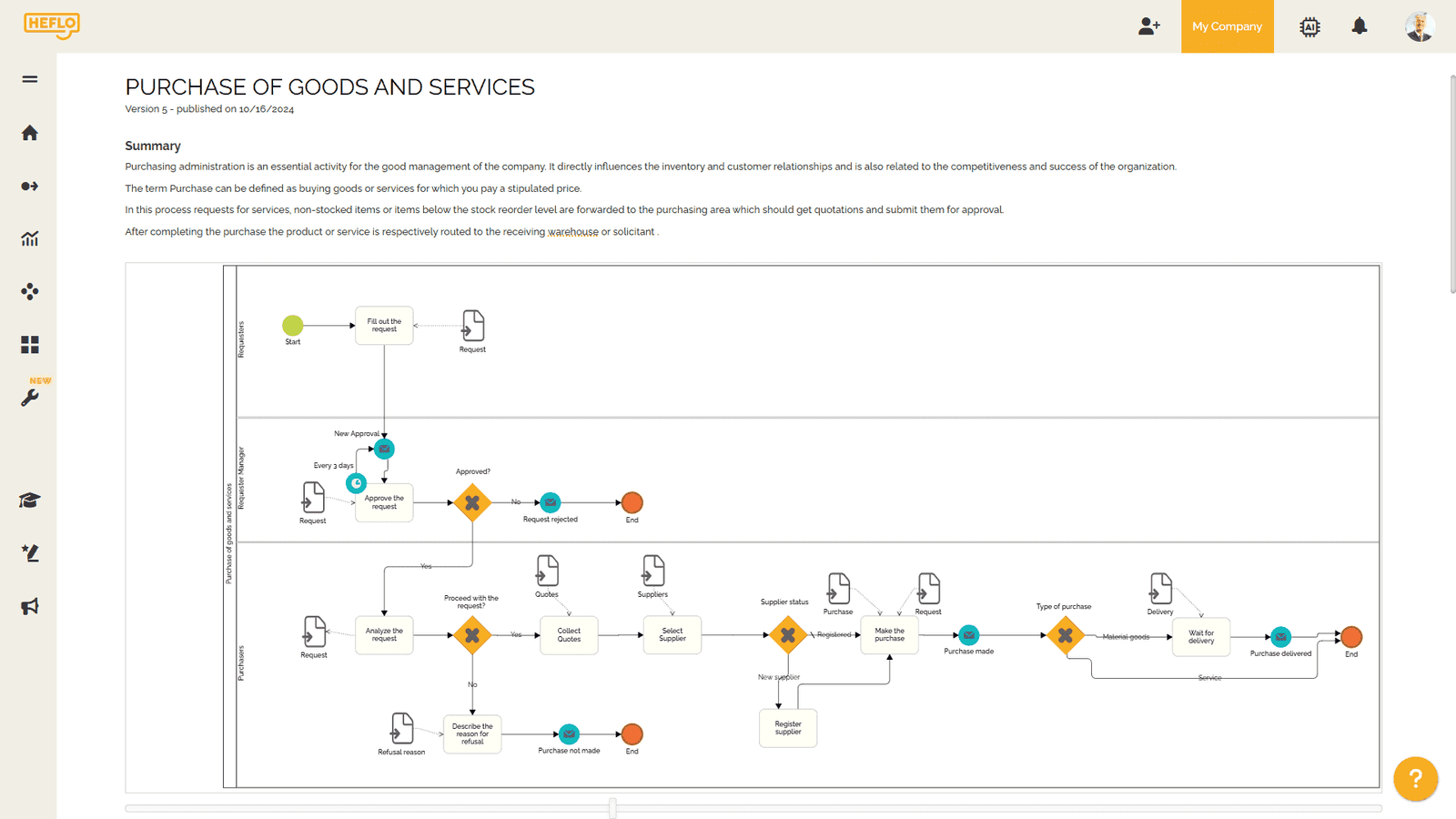
Publish approved process knowledge
Make processes available in a centralized portal so employees can find and follow the approved way of working. Learn more about process documentation software.
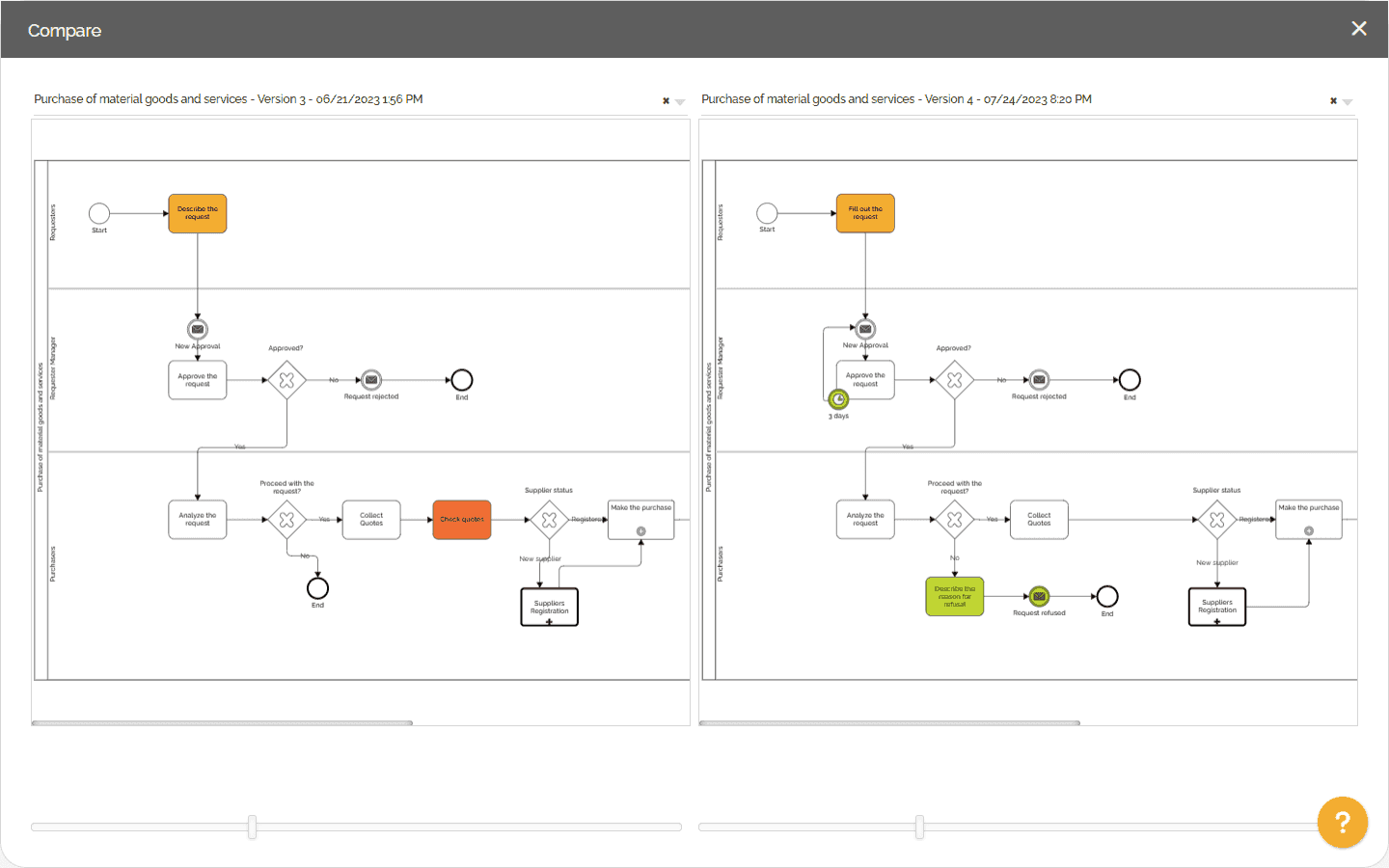
Govern changes and versions
Manage process updates with version control, permissions, approval flows, and controlled publication so the standard is always traceable.
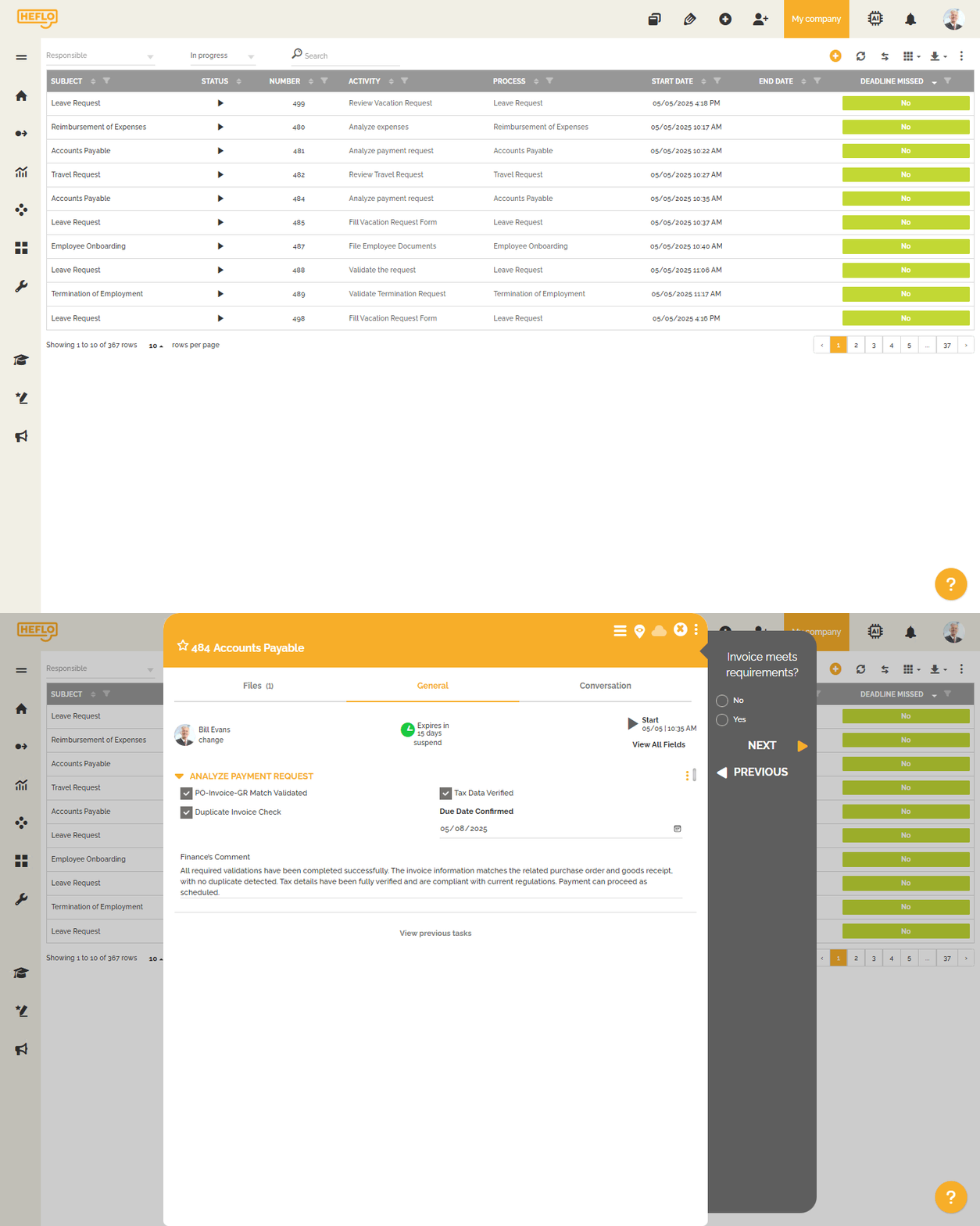
Execute workflows from the process model
Turn modeled processes into running workflows with tasks, forms, deadlines, routing rules, alerts, and escalations. See workflow automation software.
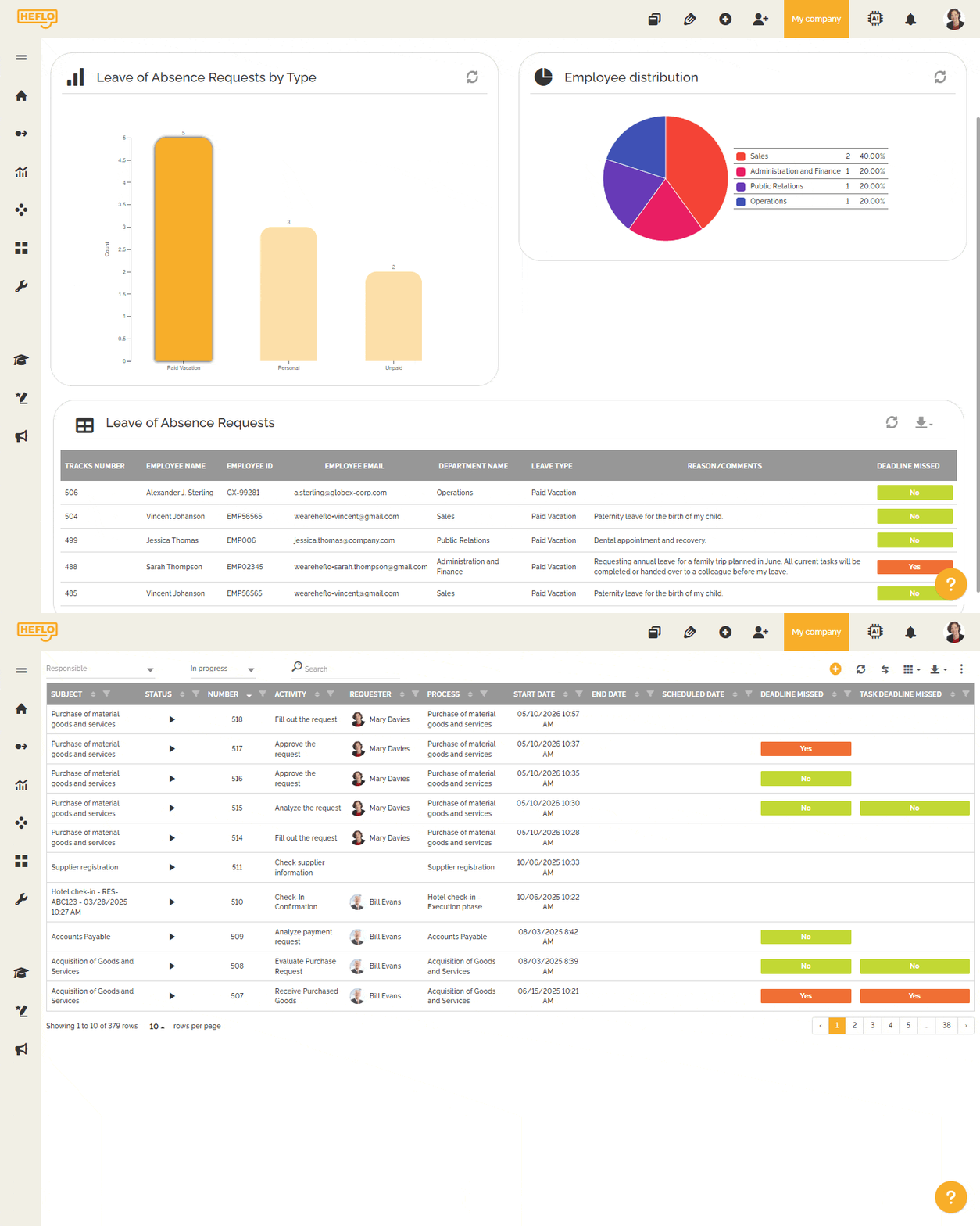
Monitor performance and exceptions
Give managers visibility into delays, deviations, workload, and improvement opportunities, supporting management by exception instead of constant manual inspection.
Improve continuously
Use process data and feedback to refine how work is performed, controlled, and measured over time, closing the loop between execution and improvement.
Examples of processes managed with BPM software
BPM applies to recurring business processes where responsibilities, rules, deadlines, approvals, documentation, and visibility matter. The same lifecycle is useful across finance, HR, procurement, IT, customer service, and shared services.

Control request intake, approvals, budget checks, deadlines, and traceability across requesters, managers, and procurement teams.

Manage supplier invoices from reception to payment, with validation, authorization, scheduling, and full audit traceability.

Coordinate HR, IT, managers, forms, tasks, and deadlines from one structured workflow so every new hire follows the same governed experience.

Route internal employee requests with standardized forms, responsibilities, and SLA visibility.
Manage validations, exceptions, approvals, due dates, and audit history without depending on email threads and informal follow-up.

Track requests, responsibilities, response times, escalations, and outcomes so service performance can be measured and improved.

Control impact analysis, approvals, implementation steps, and versioned decisions, keeping technical and business stakeholders aligned.

Govern document review, comments, approvals, publication, and revision history through a structured workflow.
Standardize cross-functional service delivery with portals, task lists, deadlines, dashboards, and traceability.
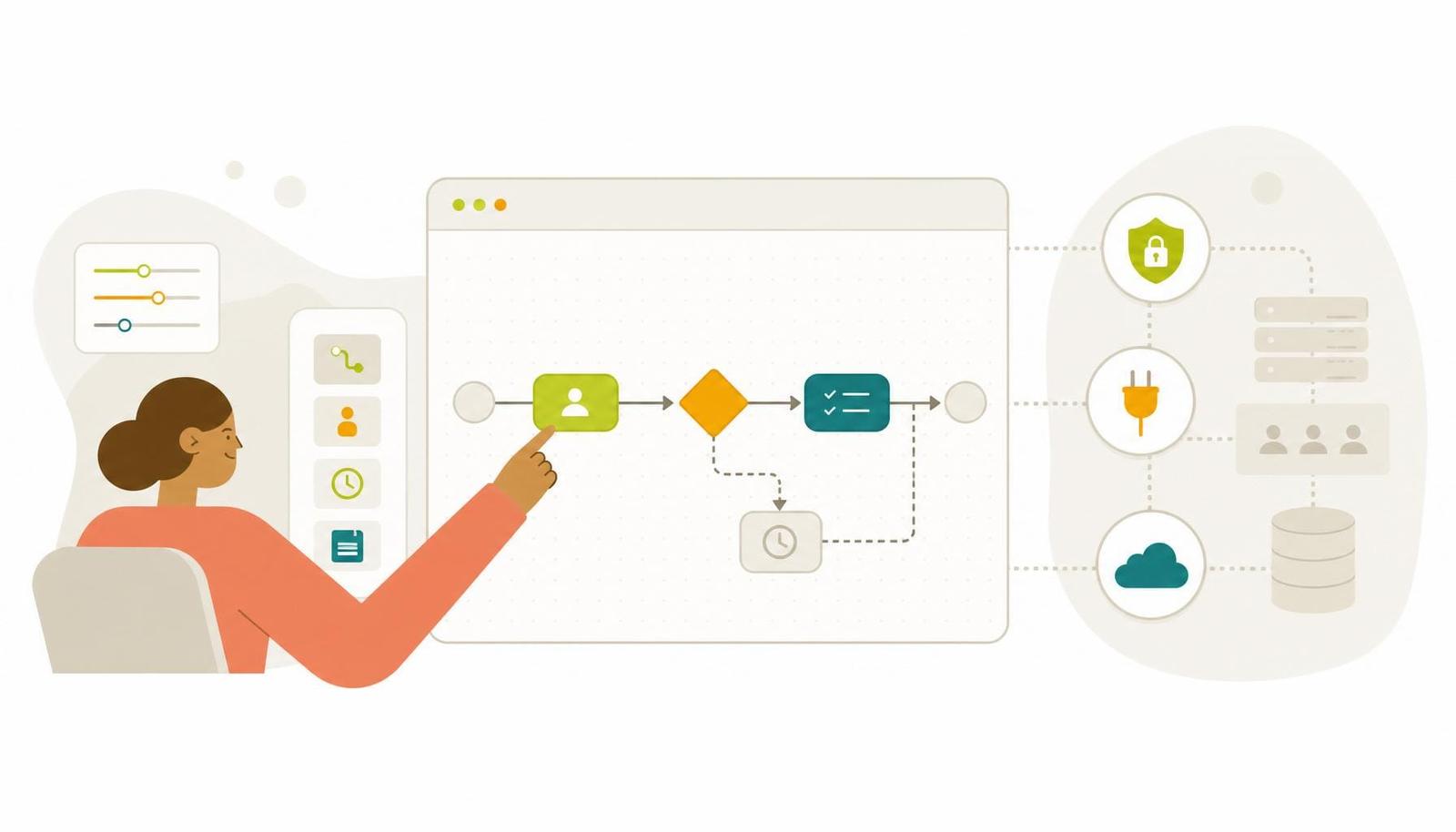
Give process analysts more autonomy without weakening IT governance
BPM works better when process analysts can improve business logic without turning every change into a development project.
Process analysts understand how work should move: steps, responsibilities, routing conditions, forms, approvals, deadlines, alerts, and exception paths. IT remains essential for integrations, architecture, identity, security, infrastructure, and technical standards.
HEFLO helps create the right separation of responsibilities: process teams can evolve business logic in a controlled way, while IT keeps ownership of technical governance.
See how HEFLO can help manage business processes from modeling to continuous improvement
Schedule a demoWhat our customers say about HEFLO
Business Process Management FAQ
Business Process Management is the discipline of designing, governing, executing, monitoring, and continuously improving how work happens across an organization. It helps teams make processes visible, standardized, controlled, and aligned with business objectives.
BPM software is used to model processes, document procedures, manage versions, publish approved process knowledge, execute workflows, monitor performance, and identify improvement opportunities.
Workflow automation executes tasks and routes work. BPM is broader: it manages the lifecycle behind those workflows, including modeling, documentation, governance, publication, execution, monitoring, and improvement.
Process documentation explains how work should happen. BPM connects that knowledge to governance, execution, performance visibility, and continuous improvement.
No. BPM is the management discipline. BPMN is a modeling notation used to represent business processes visually. A BPM platform may use BPMN as part of a broader lifecycle that includes documentation, governance, execution, and monitoring.
Not always. Some BPM initiatives focus first on understanding, documenting, standardizing, and governing processes. Automation becomes valuable when the organization needs the process to guide execution, route tasks, control deadlines, and generate operational data.
Yes. BPM can help define process ownership, control versions, manage permissions, preserve history, publish approved procedures, and provide traceability for audits and internal controls.
Business analysts and process analysts can manage many aspects of process logic when the platform supports visual configuration. IT should still remain involved in integrations, security, architecture, identity, infrastructure, and enterprise standards.
BPM software can manage approval workflows, procurement processes, HR service requests, employee onboarding, invoice approvals, document approvals, customer service requests, change requests, Shared Services processes, and many other recurring cross-functional workflows.
HEFLO supports BPM by connecting BPMN modeling, process documentation, process publication, version control, workflow execution, deadlines, alerts, traceability, dashboards, and continuous improvement in one process-driven platform.