Team Productivity
Why your business feels chaotic (and what's actually causing it)


If this feels familiar, your business is not alone
- Work takes longer than it should
- You constantly need to follow up with people
- Tasks get stuck without a clear reason
- Different people do the same work in different ways
- Important knowledge lives only in someone's head
- When someone is absent, everything slows down
This is usually not about effort or talent. It's about how work is structured.
What this looks like in practice
How structured are your business processes?

You don't have a productivity problem
Most companies try to fix productivity by pushing people harder, adding meetings, or introducing new tools.
But when work itself is not clearly structured, even the best teams struggle.
What looks like inefficiency is often:
- Lack of defined processes
- No clear flow of tasks
- Decisions happening informally
- No visibility into what is happening
When processes are clear, productivity becomes a natural outcome — not something you need to force.
Bring structure to your operations — talk to a specialist.
Schedule a demoWhat structured work actually looks like
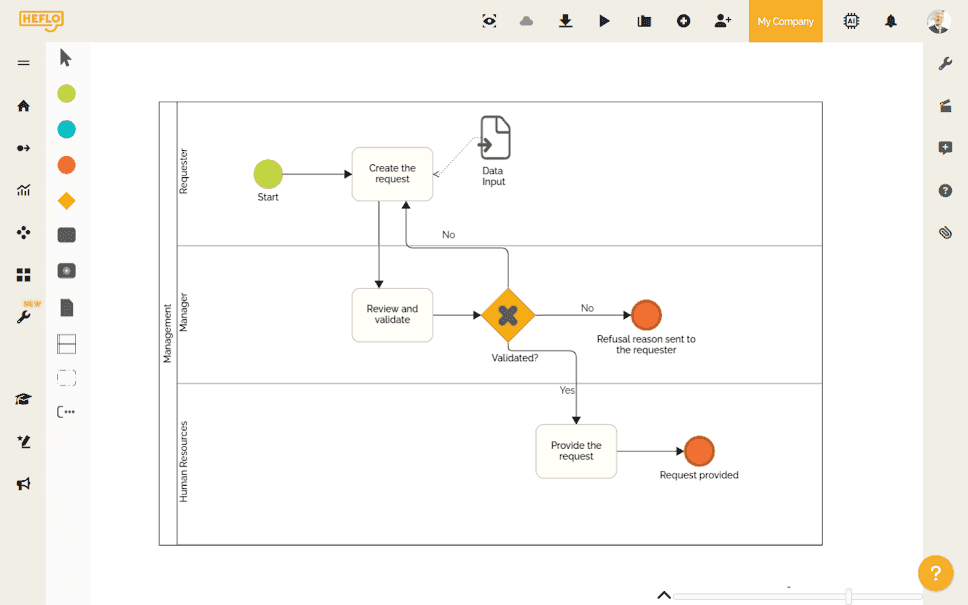
Map your team's work as a visual process
Use BPMN to design workflows that show exactly who is responsible for each step — and what happens next.
When your process is visible, your team knows what to do without being told.
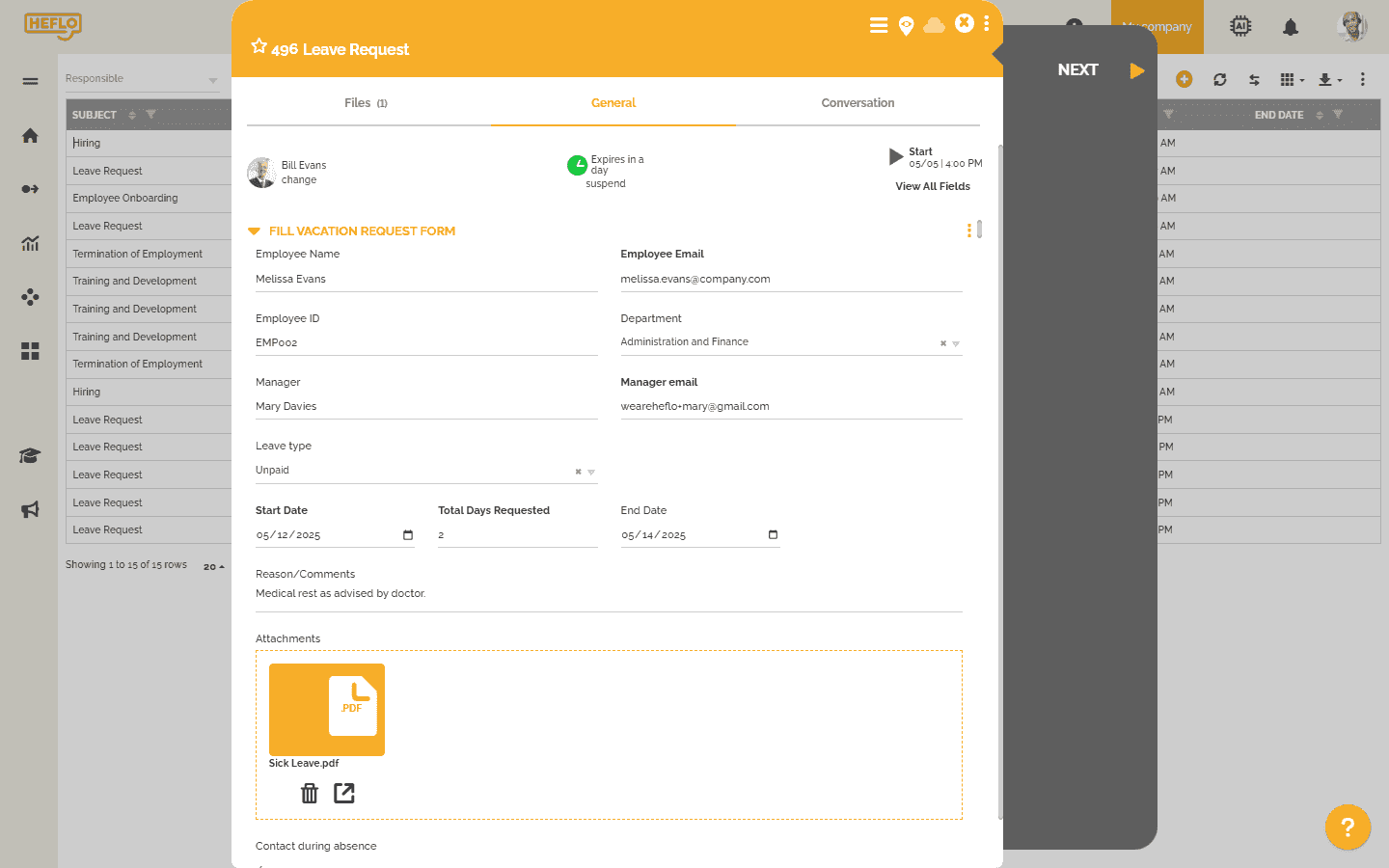
Automate the repetitive work that slows teams down
Define rules, set deadlines, and route tasks automatically — so your team spends time on real work, not coordination.
From request routing to approval chains, let the process handle the logistics.
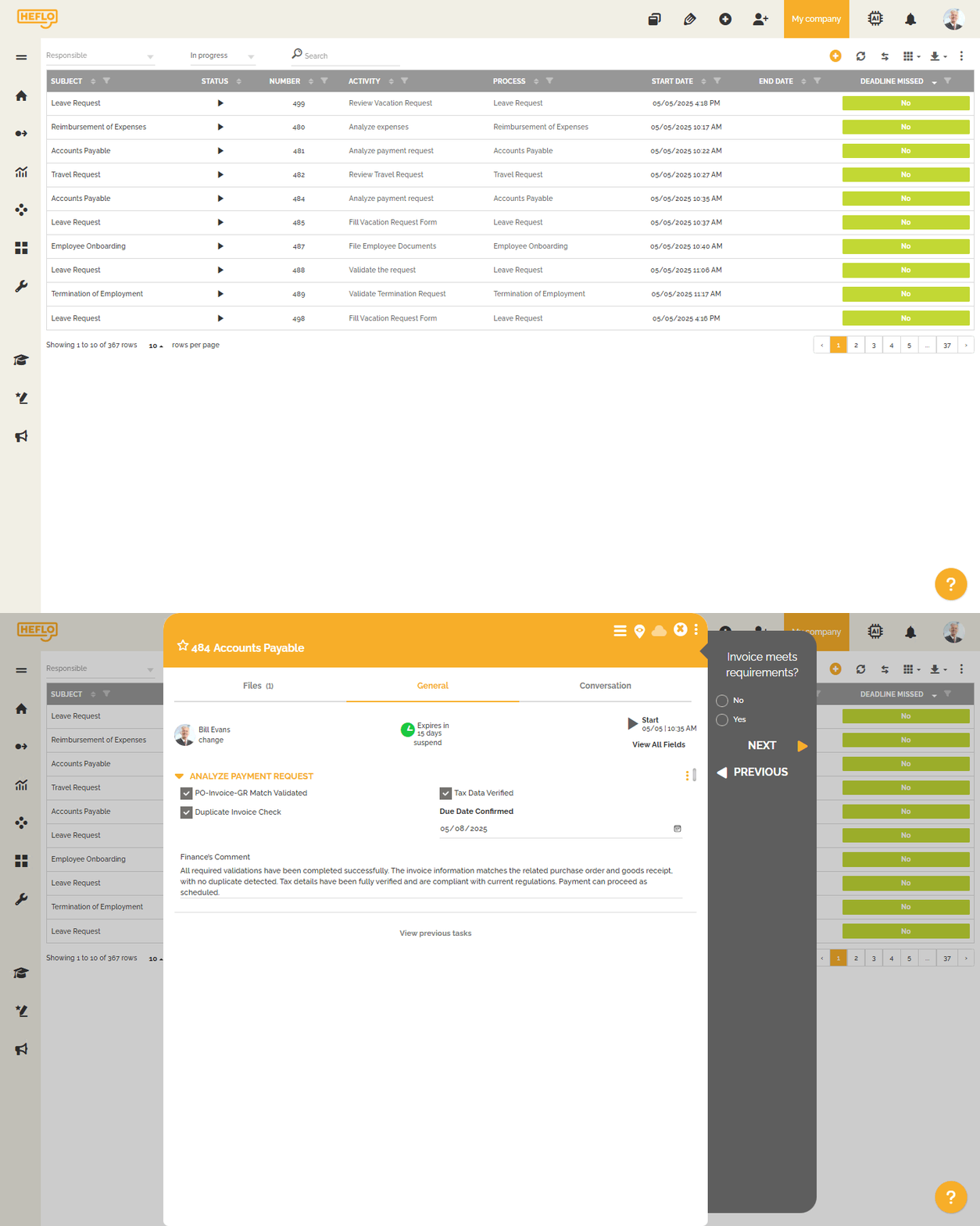
Deadlines are controlled — not chased
Time management becomes part of the process.
Managers can define deadlines, distribute tasks, and receive alerts only when something goes off track.
If everything runs as expected, there's no need for constant follow-ups.
Instead of chasing people, managers focus only on exceptions — where real attention is needed.
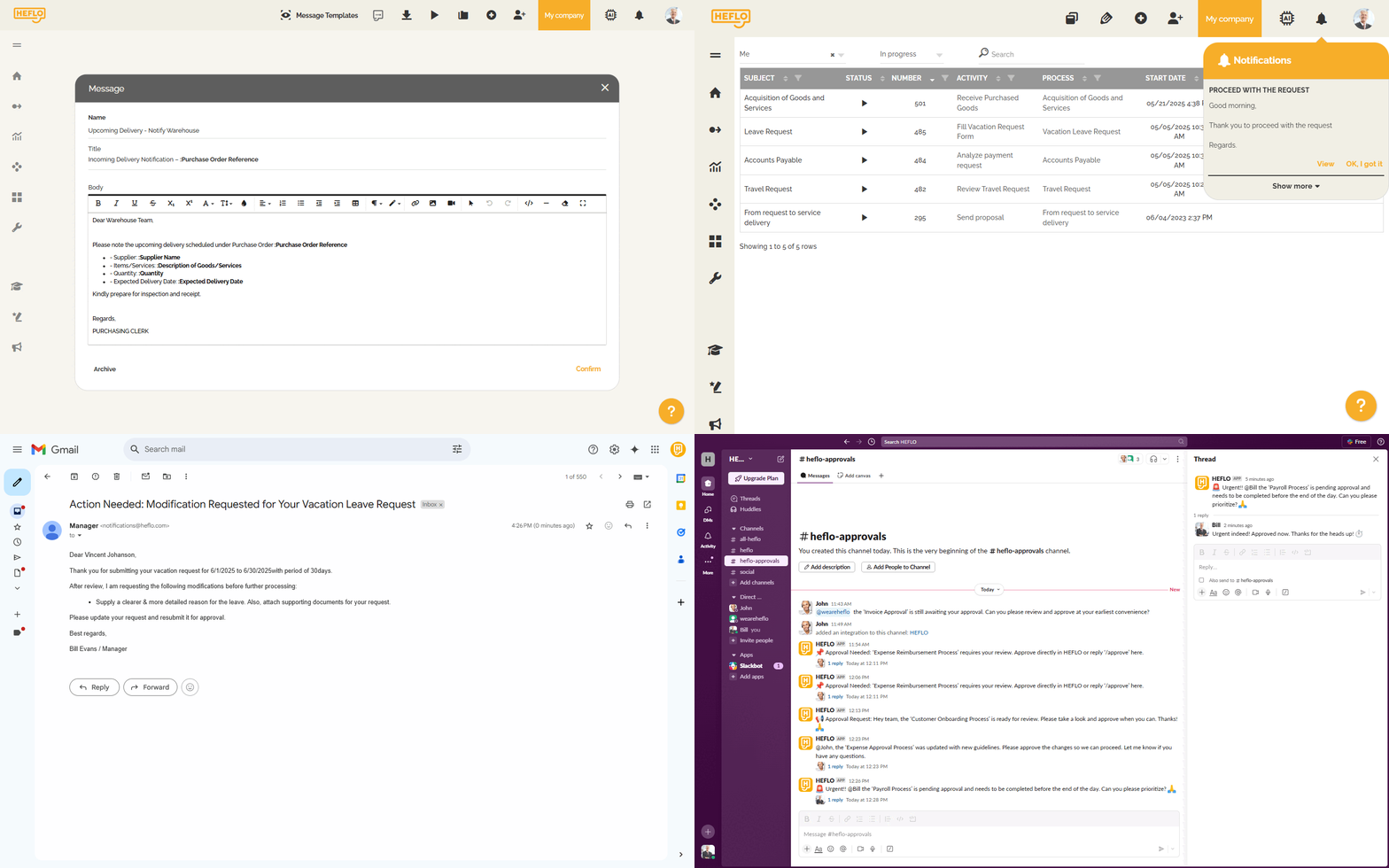
Communication is built into the process
Communication no longer depends on manual effort.
Instead of writing emails or messages from scratch, the process can automatically trigger standardized communications at the right moments.
This reduces effort, avoids inconsistencies, and improves how the organization is perceived — both internally and by customers.
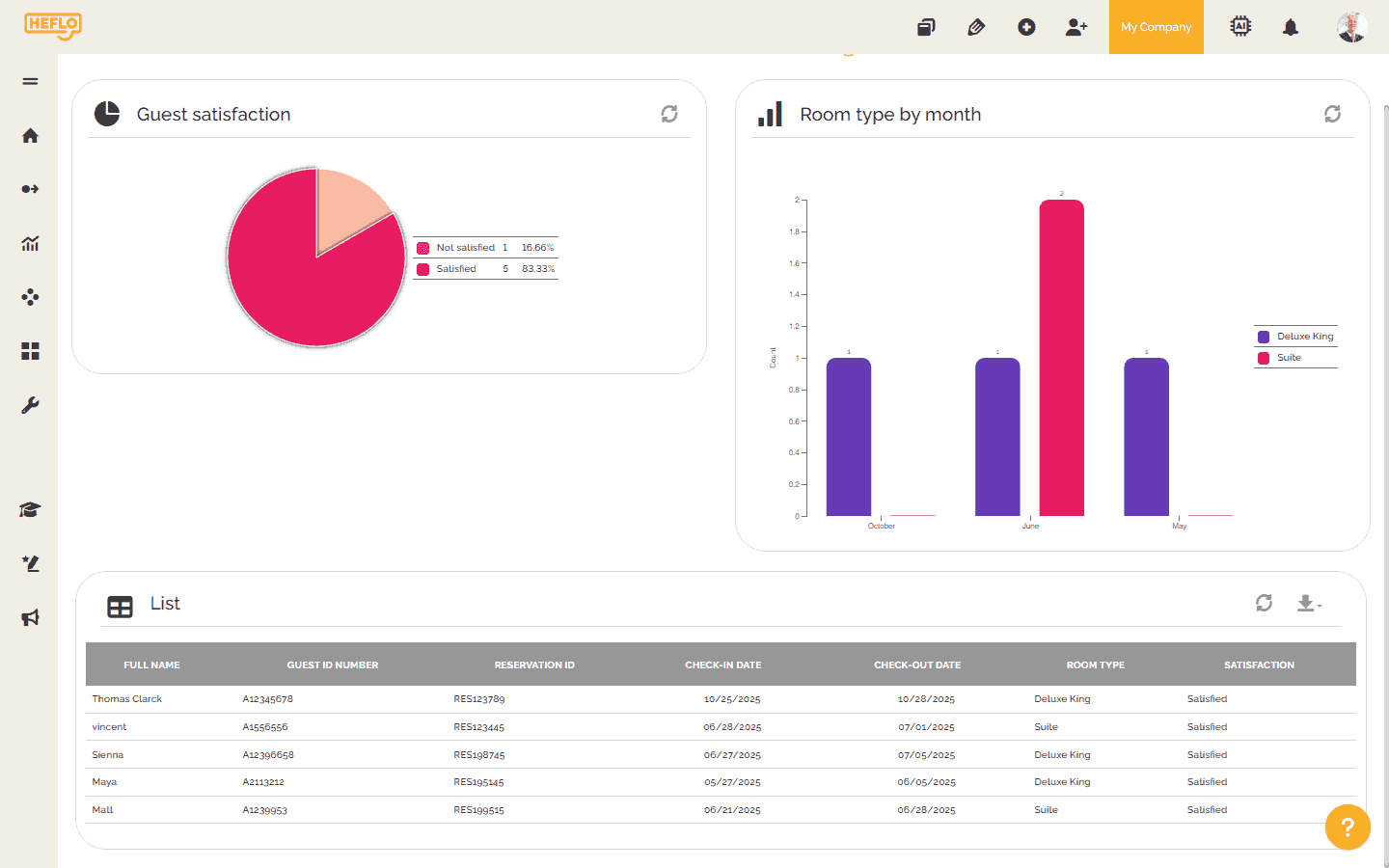
Visibility through dashboards and metrics
Managers can clearly see what is happening.
Dashboards provide a real-time view of performance, allowing drill-down into specific cases when needed.
This can be as simple as built-in views or as advanced as integrating with your existing BI tools.
The result is better control, better decisions, and continuous improvement.
You don't need to chase work anymore.
Monitor progress without micromanaging

See what's moving as work happens

Identify what's blocked instantly

Know who needs attention

Act only when something goes off track
Templates for Free
Start from real business processes
You don't need to start from scratch.
Use ready-to-use process templates based on real business scenarios and adapt them to your operation.
If needed, our team can guide you to get started faster and structure your processes the right way.
What our customers say about HEFLO
Frequently asked questions
In most cases, it's not people — it's unclear or inconsistent processes.
When work depends on follow-ups, individual knowledge, or informal decisions, productivity naturally drops.
Organizing processes doesn't need to be complex, but it does require structure.
Most teams start faster by using ready-to-use templates and adapting them to their reality. From there, processes can evolve gradually with real usage.
If needed, our team can support you — whether you're working independently, with a consultant, or looking for professional guidance.
In practice, yes.
Manual approaches often fail over time because they rely on discipline and memory. Even if people follow the process at first, they tend to fall back into old habits.
Software ensures that processes are actually followed — not just documented — by guiding execution, assigning tasks, and enforcing consistency.
It depends on your context, goals, and level of complexity.
Some teams start small and expand gradually, while others design more structured initiatives from the beginning.
The best approach is to define a practical starting point. If needed, our team can help you design a path that fits your operation.
→ Talk to our teamThis is a common concern — but in practice, the opposite happens.
Teams usually become more organized and predictable, without losing flexibility where it matters.
Instead of improvising, people gain clarity on how work should flow — which reduces stress and improves execution.
Not necessarily.
In most cases, companies use structured processes to increase productivity with the same team — not to reduce headcount.
For example, organizations often report significant gains in output after structuring their processes, without increasing team size.
The goal is to remove inefficiencies, not people.